

Staffing Recruiting Industry Trends 2026: Future of Hiring Explained
The staffing recruiting industry trends 2026 are reshaping how companies hire, retain, and manage talent across nearly every industry. Today, workforce quality, hiring speed, employee retention, and operational flexibility are becoming major competitive advantages.
For company owners, HR managers, production leaders, procurement teams, workforce planning managers, and recruiters, hiring has become more complex than ever before.
Labour shortages, rising costs, employee burnout, changing candidate expectations, and rapid technology growth are forcing businesses to rethink traditional recruitment strategies.
In 2026, staffing is no longer simply about filling open positions. It is about building long-term workforce stability while staying agile in a changing economy.
This is where staffing agencies and workforce solution providers are playing a much bigger role. Companies are increasingly relying on staffing partners to help solve workforce shortages, reduce hiring delays, improve compliance, and manage contingent labour more effectively.
At BluebixInc, businesses across healthcare, manufacturing, engineering, industrial operations, and professional services are finding workforce solutions designed to improve hiring speed, workforce quality, and operational performance.
From direct-hire staffing and workforce optimization to healthcare staffing solutions and manufacturing recruitment, companies are seeking smarter ways to adapt to modern workforce challenges.
This guide explores the biggest staffing and recruiting industry trends in 2026, why they matter, how they impact businesses, and what organizations can do to stay ahead in the future of hiring.
What Is Driving the Staffing & Recruiting Industry in 2026?
The staffing industry in 2026 is being shaped by several major forces simultaneously. Economic uncertainty, labour shortages, technology growth, workforce flexibility, and changing employee expectations are all pushing businesses toward new recruitment strategies.
Hiring today feels similar to managing a supply chain during unpredictable weather. One disruption can slow everything down. Open positions can impact productivity, customer service, project timelines, compliance, and revenue generation.
This is why workforce planning has become a business-critical strategy rather than simply an HR function.
The Evolution of Workforce Demands
Workforce expectations have changed significantly over the last few years. Employees now prioritize flexibility, career growth, workplace culture, stability, and work-life balance alongside salary.
At the same time, employers are demanding:
- Faster hiring
- Higher productivity
- Specialized skills
- Workforce flexibility
- Better retention
- Reduced labor costs
This growing gap between workforce expectations and business demands is one of the biggest reasons staffing agencies are continuing to expand rapidly in 2026.
Industries like healthcare, manufacturing, engineering, logistics, and industrial operations are facing serious talent shortages. Skilled workers are becoming harder to find, especially for technical and operational roles.
As a result, businesses are relying more on:
- Contract staffing
- Direct hire staffing
- Temporary workforce solutions
- Contingent workforce management
- Recruitment process outsourcing
- Workforce analytics
Companies want hiring systems that move faster while maintaining workforce quality and operational stability.
Why Traditional Hiring Models Are Changing
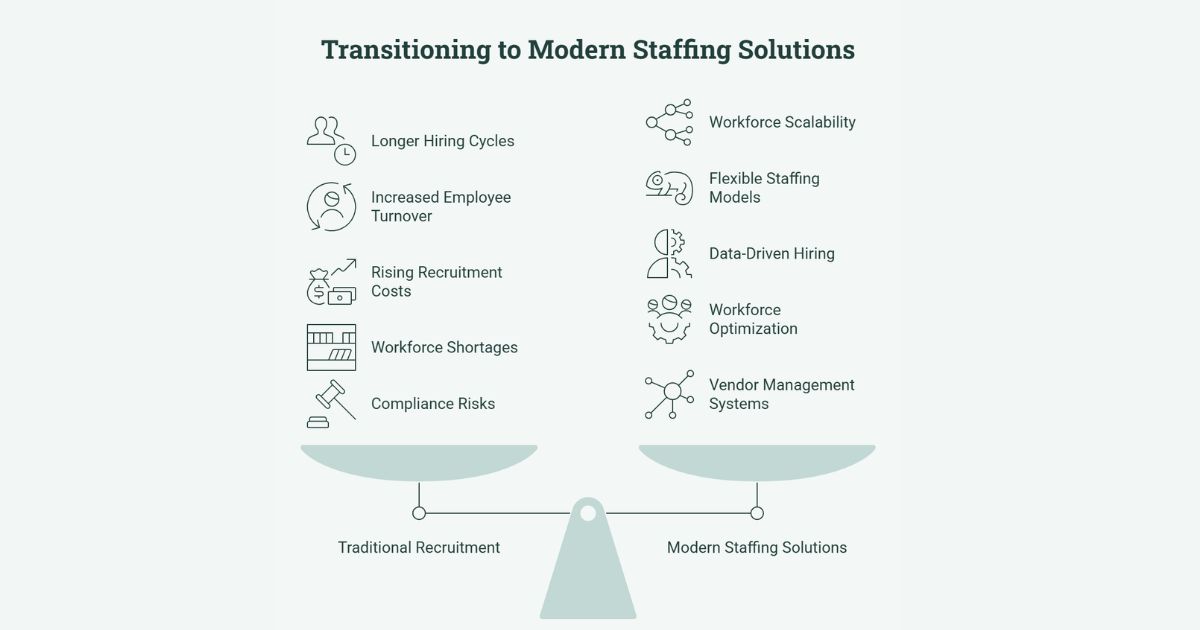
Traditional recruitment methods are struggling to keep up with modern workforce demands. Posting jobs online and waiting for candidates is no longer enough in competitive labor markets.
Businesses now face:
- Longer hiring cycles
- Increased employee turnover
- Hiring delays
- Rising recruitment costs
- Workforce shortages
- Compliance risks
- Operational downtime
For example, a manufacturing plant without skilled maintenance technicians may experience production delays that cost thousands of dollars per day.
Hospitals facing nurse shortages may struggle to maintain high-quality patient care. Engineering firms that are missing technical specialists may fall behind on project deadlines.
These workforce pressures are forcing companies to rethink their hiring strategies.
Modern staffing solutions now focus on:
- Workforce scalability
- Recruitment technology
- Data-driven hiring
- Flexible staffing models
- Vendor management systems
- Workforce optimization
Companies want hiring processes that operate more like high-performance systems rather than slow manual workflows.
How Economic Shifts Are Reshaping Recruitment
Economic pressure continues to influence staffing and recruitment strategies in 2026. to become more strategic about workforce planning.
Many companies are shifting from reactive hiring to predictive hiring.
Instead of waiting for staffing shortages to occur, businesses are now forecasting workforce needs months in advance. Workforce analytics and recruitment forecasting tools help organizations prepare for:
- Seasonal demand spikes
- Expansion projects
- Retirement waves
- Production increases
- Healthcare demand surges
This proactive approach helps businesses:
- Reduce overtime costs
- Improve workforce efficiency
- Prevent operational disruption
- Lower turnover risks
- Improve labor budgeting
Organizations that invest in workforce planning early often achieve greater operational stability and competitive advantage.
Top Staffing & Recruiting Industry Trends in 2026
The staffing recruiting industry trends 2026 show a major shift toward technology, workforce flexibility, analytics, and specialized hiring strategies. Businesses that adapt quickly are more likely to attract skilled talent and maintain operational performance.
AI-Powered Recruiting & Automation
Artificial intelligence has become one of the biggest recruitment technology trends in 2026. AI-powered recruiting tools are helping businesses automate repetitive hiring tasks, improve candidate matching, and reduce recruitment timelines.
Think of AI as a navigation system for hiring. Instead of manually sorting through thousands of resumes, recruiters can quickly identify the most qualified candidates using smart algorithms and workforce analytics.
How AI Is Transforming Candidate Sourcing
AI recruiting tools help staffing agencies and HR teams:
- Search resumes faster
- Match job descriptions with candidate profiles
- Identify passive candidates
- Predict hiring success rates
- Improve recruitment efficiency
- Automate interview scheduling
This significantly reduces time-to-fill metrics while improving hiring consistency.
For example, manufacturing companies hiring multiple machine operators can use AI to screen technical certifications, experience levels, and operational skills much faster than manual recruitment processes.
Healthcare staffing agencies also use AI to identify licensed professionals, verify credentials, and efficiently manage compliance documentation.
AI Screening vs Human Recruiters
While AI improves hiring speed, human recruiters remain extremely important.
Technology can analyze resumes quickly, but it cannot fully evaluate:
- Communication skills
- Personality fit
- Leadership potential
- Emotional intelligence
- Workplace adaptability
Recruitment still requires human judgment, especially for leadership positions, healthcare staffing, engineering recruitment, and executive hiring.
The most successful staffing firms in 2026 combine:
- AI efficiency
- Human expertise
- Workforce analytics
- Relationship-driven recruiting
This hybrid recruitment model is becoming the future of staffing.
Benefits of Recruitment Automation
Recruitment automation provides several advantages for businesses:
- Faster hiring processes
- Reduced administrative work
- Improved candidate experience
- Better workforce tracking
- Lower recruitment costs
- Improved compliance monitoring
For HR managers and workforce planning teams, automation reduces repetitive tasks, allowing recruiters to focus more on relationship-building and strategic hiring decisions.
Businesses using recruitment automation often gain a major advantage in competitive labour markets where hiring speed matters.
Skills-Based Hiring Is Replacing Degree-Based Hiring
One of the fastest-growing staffing industry trends in 2026 is skills-based hiring.
Employers are increasingly prioritizing real-world skills, certifications, technical abilities, and practical experience over formal degrees.
Many businesses have realized that strong technical capability often matters more than academic background.
Why Employers Focus on Skills Over Education
Skills-based recruitment helps businesses:
- Access larger talent pools
- Reduce hiring delays
- Improve workforce diversity
- Find practical candidates faster
- Reduce recruitment barriers
For example:
- Manufacturing companies value CNC experience over degrees
- IT firms prioritize certifications and coding ability
- Healthcare employers focus heavily on clinical competencies
- Skilled trades hiring depends on hands-on expertise
This approach helps businesses solve workforce shortages more efficiently.
Fast-Growing Skill-Based Industries
Several industries are rapidly adopting competency-based hiring models:
- Manufacturing
- Industrial operations
- Healthcare
- Technology
- Logistics
- Skilled trades
- Engineering
As labour shortages continue, companies that prioritize skills over traditional credentials often fill positions faster while maintaining workforce quality.
Flexible Staffing Models Continue to Grow
Businesses today need workforce flexibility more than ever before. Economic uncertainty, project-based work, seasonal demand, and operational shifts are increasing the demand for flexible staffing solutions.
Flexible staffing models act like shock absorbers for businesses. They help companies scale workforce levels without creating long-term hiring risks.
Companies are increasingly relying on:
- Temporary staffing
- Contract staffing
- Project-based hiring
- PRN staffing
- Contingent workforce management
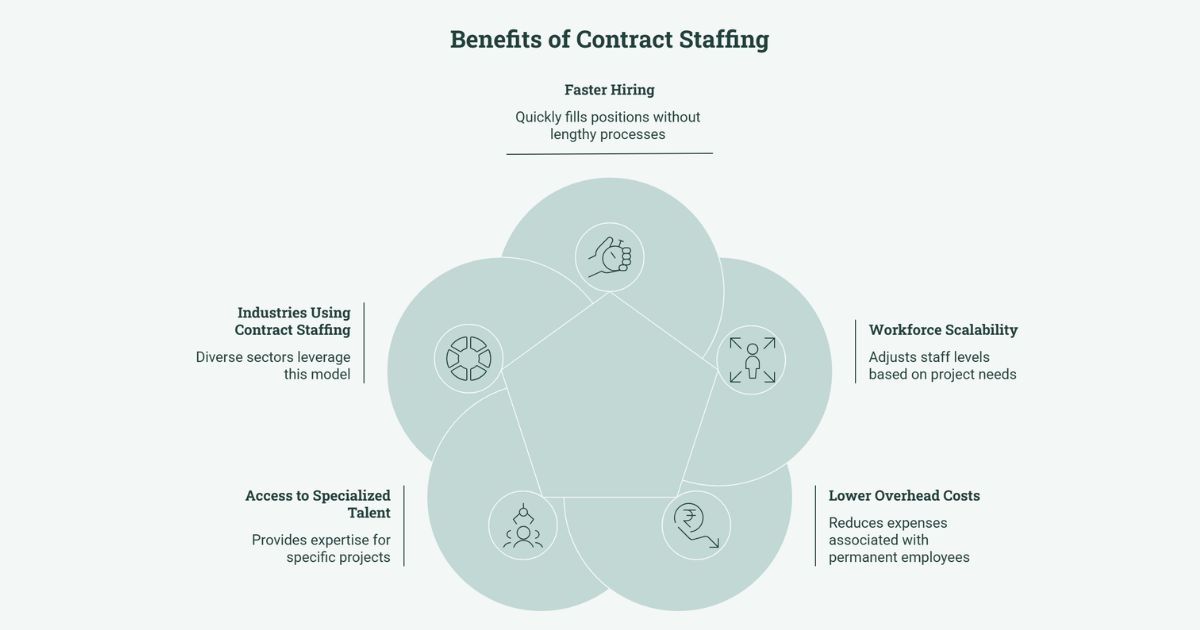
Contract Staffing
Contract staffing allows businesses to quickly fill short-term or specialized positions without long-term commitments.
Industries using contract staffing heavily include:
- Engineering
- Manufacturing
- Healthcare
- IT
- Logistics
Contract staffing provides:
- Faster hiring
- Workforce scalability
- Lower overhead costs
- Access to specialized talent
Temporary Workforce Solutions
Temporary staffing continues growing rapidly in industries facing workforce fluctuations.
Businesses often use temporary staffing during:
- Seasonal demand spikes
- Employee leave coverage
- Expansion periods
- Emergency staffing shortages
- High production cycles
For production managers and supervisors, temporary staffing helps maintain operational continuity without overextending payroll budgets.
Project-Based Hiring
Project-based recruitment is becoming increasingly common for:
- Engineering projects
- Industrial shutdowns
- Construction operations
- Technology implementations
- Healthcare initiatives
Companies often need specialized expertise for limited timelines. Staffing agencies help organizations quickly access qualified professionals without long-term hiring commitments.
Manufacturing & Industrial Staffing Demand Is Rising
Manufacturing and industrial staffing demand continues to grow rapidly in 2026 due to labour shortages, workforce retirements, and increased production demands.
Production facilities depend heavily on workforce reliability. Even small staffing shortages can impact productivity, safety, and customer delivery timelines.
Skilled Trades Shortages
Manufacturing companies continue struggling to hire:
- Welders
- CNC machinists
- Maintenance technicians
- Electricians
- Machine operators
- Engineers
Many experienced, skilled workers are retiring faster than younger workers are entering the industry.
This creates major workforce gaps in industrial operations.
Production & Plant Hiring Challenges
Manufacturing leaders face several hiring pressures:
- Production downtime risks
- Overtime expenses
- Shift coverage issues
- Workforce fatigue
- Delayed production schedules
For plant managers, open positions can create operational bottlenecks, like missing gears in a machine. One workforce gap can slow entire production systems.
Workforce Gaps in Operations
Staffing agencies specializing in industrial recruitment help businesses:
- Reduce downtime
- Improve workforce reliability
- Fill urgent production roles
- Support operational growth
- Improve workforce planning
At Bluebix Inc, manufacturing and industrial staffing solutions help businesses address workforce shortages while improving operational efficiency and long-term workforce stability.
Healthcare Staffing Shortages Continue in 2026
Healthcare staffing remains one of the most challenging sectors of the workforce in 2026. Hospitals, clinics, long-term care facilities, and healthcare systems continue facing staffing shortages across multiple specialties.
Nurse Burnout & Retention Issues
Nurse burnout remains a major challenge due to:
- Heavy patient loads
- Long working hours
- Emotional stress
- Staffing shortages
- Overtime demands
Healthcare organizations are increasingly focused on workforce retention strategies alongside recruitment efforts.
Travel Nursing & PRN Demand
Travel nursing and PRN staffing continue growing because healthcare facilities need flexible workforce support during:
- Seasonal patient surges
- Emergency staffing shortages
- Vacation coverage
- Specialized care demand
Healthcare staffing agencies help organizations maintain continuity of care while reducing staffing disruptions.
Healthcare Workforce Planning
Healthcare organizations are now investing more heavily in:
- Workforce forecasting
- Credential tracking
- Compliance management
- Staffing partnerships
- Recruitment analytics
At BluebixHealth, healthcare staffing solutions help facilities access qualified professionals while improving workforce flexibility, hiring efficiency, and support for patient care.
Vendor Management & MSP Programs Are Expanding
Managed Service Provider (MSP) staffing models continue to expand as businesses seek greater control over their workforces and vendor management.
Companies working with multiple staffing vendors often struggle with:
- Supplier performance tracking
- Workforce visibility
- Compliance monitoring
- Cost control
- Hiring consistency
MSP programs centralize workforce management while improving operational efficiency.
Why Companies Use MSP Staffing Models
MSP staffing solutions help businesses:
- Consolidate vendors
- Improve workforce reporting
- Standardize hiring processes
- Reduce staffing costs
- Improve compliance oversight
Supplier Performance Metrics
Vendor management teams increasingly track:
- Fill rates
- Time-to-fill
- Candidate quality
- Retention performance
- Compliance metrics
This data-driven approach helps companies improve workforce performance while reducing hiring risks.
Workforce Cost Optimization
MSP staffing programs also help organizations:
- Control labor costs
- Improve budget forecasting
- Reduce overtime expenses
- Improve workforce scalability
Conclusion
The staffing recruiting industry trends 2026 clearly show that hiring is becoming more strategic, technology-driven, and workforce-focused than ever before.
Businesses can no longer rely on outdated recruitment methods if they want to remain competitive in today’s labour market.
Companies that invest in workforce planning, recruitment technology, staffing partnerships, and flexible workforce models will be better positioned to manage labour shortages, reduce operational risks, and improve long-term growth.
Whether businesses operate in healthcare, manufacturing, engineering, logistics, or professional services, workforce stability is becoming one of the biggest drivers of operational success.
At BluebixInc organizations can access staffing solutions designed to support workforce flexibility, hiring efficiency, operational performance, and long-term workforce growth.
The future of recruitment belongs to businesses that adapt early, plan smarter, and build workforce strategies designed for long-term success.
10. FAQs
How will AI change the staffing industry in 2026?
AI will continue improving candidate sourcing, resume screening, workforce analytics, and hiring automation. However, human recruiters will still play a critical role in relationship-building, culture fit evaluation, and strategic hiring decisions.
The future will likely combine AI efficiency with human expertise for better recruitment outcomes.
Why are staffing shortages still happening in 2026?
Many industries continue facing labour shortages due to skill gaps, aging workforces, changing employee expectations, and increased competition for specialized talent. Industries such as healthcare, manufacturing, engineering, and skilled trades are particularly affected by ongoing workforce shortages and retention challenges.
What industries will need staffing agencies the most in 2026?
Healthcare, manufacturing, logistics, engineering, technology, and industrial sectors are expected to rely heavily on staffing agencies. These industries face rapid hiring needs, workforce shortages, project-based demands, and operational pressure requiring flexible staffing support and specialized recruitment expertise.
What is skills-based hiring, and why is it growing?
Skills-based hiring focuses on practical abilities and competencies instead of traditional degrees. Employers increasingly prioritize proven experience, certifications, and technical capabilities because it widens talent pools and helps fill roles faster in competitive hiring markets.
How can staffing agencies help reduce hiring costs?
Staffing agencies can reduce costs by shortening hiring timelines, improving candidate quality, reducing turnover, handling recruitment administration, and helping businesses avoid productivity losses caused by unfilled positions or inefficient hiring processes.
Why are MSP staffing programs becoming more popular?
Managed Service Provider (MSP) programs help companies centralize staffing vendors, improve compliance, reduce labour costs, and gain better visibility into workforce performance. Businesses increasingly use MSP models to manage contingent labour more efficiently across multiple locations or departments.
How does workforce analytics improve recruiting decisions?
Workforce analytics helps businesses track hiring performance, identify workforce gaps, forecast labour needs, reduce turnover, and improve recruitment efficiency. Data-driven hiring decisions often lead to better workforce planning and stronger long-term talent strategies.
What are the biggest recruitment challenges for manufacturers in 2026?
Manufacturers continue facing skilled labour shortages, production downtime risks, aging workforces, and increased competition for technical talent. Recruiting for maintenance, engineering, machine operation, and production roles remains especially difficult in many regions.
How important is employer branding in modern recruiting?
Employer branding has become essential because candidates research company culture, work environments, leadership reputation, and employee experiences before applying. Strong employer branding improves candidate trust, increases application rates, and supports long-term recruitment success.
What should companies prioritize to stay competitive in hiring?
Businesses should focus on workforce flexibility, recruitment technology, employee retention, employer branding, workforce planning, and strong staffing partnerships. Companies that adapt quickly to workforce trends are more likely to secure top talent and maintain operational stability.