

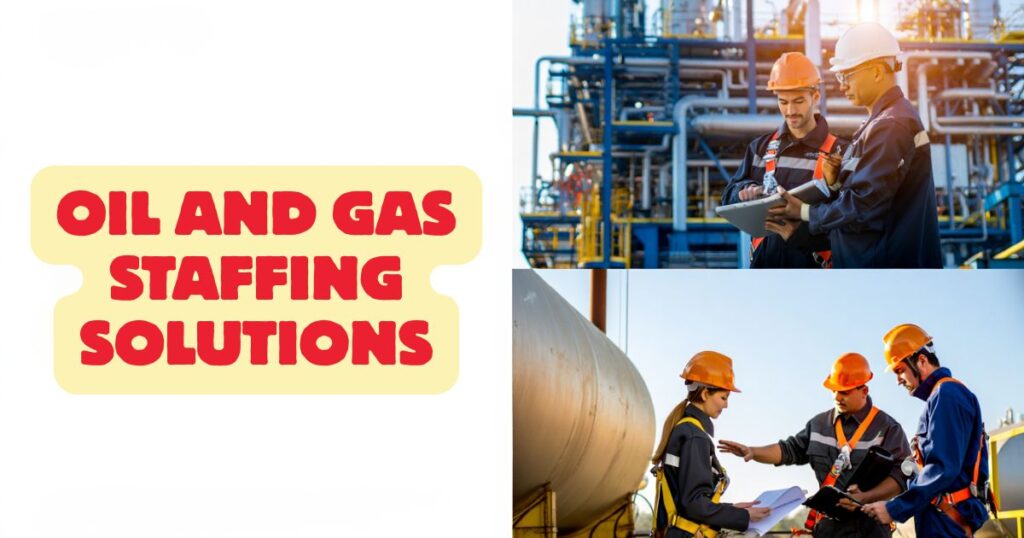
Oil and Gas Staffing Solutions: 10 Effective Strategies for Faster Hiring
Oil and gas staffing solutions help energy companies solve one of their hardest problems: getting the right people to the right site at the right time without cutting corners on safety, skill, or compliance.
In this industry, labor gaps do not stay small for long. One missed hire can slow a turnaround, stretch a crew too thin, raise overtime, or increase risk in the field.
That is why HR managers, talent acquisition managers, workforce planning managers, drilling operations managers, field operations managers, and project directors look for staffing partners who can move quickly and still protect quality. The real goal is not just filling seats. It is keeping production moving, projects on track, and people safe.
What Oil and Gas Staffing Solutions
When someone searches for oil and gas staffing solutions, they usually are not looking for a generic recruiting service.
They are looking for a reliable way to solve a workforce problem tied to operations, deadlines, safety, and cost. In most cases, the search comes from a real business need: a shutdown is approaching, a pipeline project is ramping up, a refinery turnaround is short on skilled trades, or an operations team needs fast coverage for critical field roles.
For HR directors in the energy sector, recruitment managers, and energy talent acquisition managers, this search often means, How do I hire faster without taking on unnecessary compliance risk? For workforce planning managers, it usually means, How do I match labor supply to project demand before labor costs spike?
For drilling operations managers and field operations managers, it means, How do I keep work moving safely with qualified headcount?
What are oil and gas staffing solutions?

Oil and gas staffing solutions are workforce services designed to help energy companies source, screen, mobilize, and manage workers for field, plant, technical, engineering, HSE, and project-based roles.
These solutions can support upstream, midstream, and downstream environments. They may include contract staffing, direct hire, contract-to-hire, contractor compliance support, mobilization logistics, payroll handling, and workforce reporting.
In simple terms, it is a structured way to solve labor needs in a high-risk, high-skill industry. Think of it like building a bridge between demand and execution. The demand comes from operations. The bridge is the staffing process. The result is a crew that can work safely and productively from day one.
Staffing solutions vs staffing agency vs contractor management
These terms sound similar, but they are not exactly the same.
A staffing agency mainly helps find people for open roles. An oil and gas staffing solution is broader. It includes recruiting, screening, safety verification, mobilization, onboarding, and sometimes ongoing workforce management. Contractor management focuses more on how outside workers are classified, documented, tracked, paid, and monitored once engaged.
A simple way to think about it:
A staffing agency finds talent.
A staffing solution builds the full labor engine.
Contractor management keeps that engine controlled and compliant.
Useful related terms include oilfield staffing, energy staffing agency, upstream staffing, downstream staffing, midstream workforce, rig crew staffing, refinery turnaround staffing, pipeline staffing, HSE staffing, and skilled trades staffing.
These phrases matter because buyers rarely search with one exact term. They search by project type, work environment, urgency, and role category.
Operations Managers: keeping production running with safe headcount
Drilling operations managers and field operations managers usually care most about continuity. They want the right number of qualified people on site so work does not slow down or stop. They are focused on uptime, safe execution, and reducing strain on the core crew.
If headcount falls short, the first signs are often overtime, fatigue, delayed tasks, and rising risk.
What they really want is not a stack of resumes. They want people who can show up ready, understand the job, meet site requirements, and fit the pace of the operation. For them, speed matters, but safe speed matters more.
Project Managers: mobilizing crews for shutdowns, turnarounds, and new builds
Project directors and engineering managers often face sharp labor peaks. They may need dozens of skilled workers for a turnaround, commissioning phase, maintenance campaign, or new construction package. Their concern is timing. If labor arrives late, the whole schedule can wobble like a ladder on uneven ground.
They want rapid mobilization, trade-specific talent, and confidence that the crew can hit the ground running. They also want a staffing partner that understands deadlines, shift structures, work packs, and site logistics.
HR/Talent Acquisition: faster hiring with verified compliance
HR managers, talent acquisition managers, recruitment managers, oil and gas recruiters, and HR directors in the energy sector are often measured on speed, quality, and risk control. They need faster hiring, but they also need records, documentation, and defensible processes. A bad hire in this space does more than waste time. It can create exposure.
What they really want is a repeatable hiring system with strong screening, verified certifications, and fewer surprises after the start date.
Workforce Planning Managers: forecasting labor demand and reducing cost spikes
Workforce planning managers live in the space between today’s labor needs and tomorrow’s labor gap. They care about forecasting, labor mix, bench strength, and total workforce cost. They want to avoid last-minute scrambling because urgent hiring usually costs more.
Their real need is visibility: what roles are needed, when they are needed, where shortages are likely, and how to reduce cost spikes without hurting workforce continuity.
Why Companies Use Oil & Gas Staffing Solutions
Energy companies use staffing partners because the labor challenge in oil and gas is rarely simple. Roles are specialized. Project schedules shift. Sites are remote. Safety standards are high.
Hiring in-house can work for some core positions, but when demand swings quickly, staffing support becomes a practical tool.
Speed: fill roles fast for critical operations and project timelines
In oil and gas, time is not just money. Time is production, schedule integrity, and crew stability. A fast staffing solution helps companies close labor gaps before those gaps grow into operational problems. This matters during outage planning, seasonal demand surges, emergency coverage, maintenance campaigns, and multi-site ramp-ups.
The best staffing partners do not start from zero every time. They maintain active pipelines, known candidate pools, and pre-screened workers. That means less time posting, chasing, and restarting. For a talent acquisition manager, this compresses time-to-fill. For a field operations manager, it means fewer days of working short. For a project director, it can protect milestone dates that would otherwise slide.
Speed here should not mean rush and hope. It should mean faster movement through a controlled process.
Access: specialized trades and hard-to-find technical talent
Oil and gas roles are often niche. Companies may need NDT technicians, instrument techs, pipeline inspectors, SCADA-related support, rig crew roles, lease operators, refinery planners, or skilled trades for shutdown work. These are not always roles that broad labor channels fill well.
A strong energy staffing agency gives access to specialized talent networks built over time. It knows where to find oilfield staffing candidates, refinery turnaround staffing crews, and pipeline construction staffing talent. It also knows how to match talent to environment.
A great welder for general industrial work may not be the right fit for a pipeline spread or high-compliance turnaround site.
This access matters most when the local market is tight. It is like trying to find the right part for a critical machine. You do not just need any part that looks similar. You need the one that fits exactly.
Compliance: safety, certifications, background checks, site readiness
Oil and gas hiring is not only about skill. It is also about readiness. Workers may need specific certifications, medical clearance, orientation completion, fit-for-duty documentation, drug screening, or background checks, depending on site policy.
A staffing solution adds value by turning these requirements into a clear workflow. Instead of discovering gaps after arrival, the process catches them upstream. That reduces failed starts, delays at gate access, and site-level friction.
For HR directors, compliance reduces risk. For operations, it reduces disruption. For procurement managers, it improves vendor confidence. For everyone, it supports trust. A worker who shows up without required documentation is like a truck arriving at a location without fuel. The trip happened, but the job still cannot begin.
Cost control: reduce overtime, downtime, and turnover
Labor costs in oil and gas are shaped by more than the hourly rate. Over time, rework, late project completion, safety incidents, and turnover can quietly drive costs higher. Staffing solutions help control these hidden costs by improving timing, fit, and workforce coverage.
A good partner helps companies avoid paying premium prices for panic hiring. It also reduces the drag of unfilled roles and lowers the chance of turnover caused by poor placement or weak mobilization. In many cases, the real savings come not from cheaper labor, but from avoiding expensive disruption.
Roles Oil & Gas Staffing Solutions Can Fill
One of the biggest reasons companies use oil and gas staffing solutions is the range. The need is rarely limited to one role. A site may need field labor, technical specialists, skilled trades, HSE coverage, and project support all at once. Strong staffing partners can support multiple job families across the energy value chain.
Field & operations roles (upstream/onshore/offshore)
In upstream environments, field and operations hiring often focuses on keeping drilling and production activity moving. Common roles include roustabouts, derrickhands, floorhands, drillers, toolpushers, and lease operators. Some sites may also need production technicians, pumpers, field mechanics, electricians, or automation-related support.
These roles are the backbone of daily execution. They work close to equipment, weather, schedules, and safety pressure. That is why offshore staffing solutions and onshore oilfield staffing need more than a quick sourcing push. They need workers who understand pace, procedure, and team discipline.
A drilling operations manager may prioritize reliable crew rotation coverage. A field operations manager may focus on people who can work safely with minimal ramp-up. An HR manager may need a staffing partner that can verify core requirements before travel begins. Each view is different, but all roads lead back to workforce quality.
Midstream roles
Midstream projects often require a different labor mix. Common roles include pipeline operators, welders, inspectors, NDT technicians, coating crews, and ROW agents. Depending on the project, companies may also need equipment operators, utility locators, schedulers, project coordinators, and environmental support staff.
Pipeline staffing tends to be schedule-driven and location-sensitive. Crews may move across spreads, phases, or access-constrained areas. That makes workforce mobilization and documentation especially important. A good staffing partner understands that pipeline construction staffing is not just about welding skills. It is about project fit, travel readiness, site expectations, and reporting discipline.
Refinery/petrochemical & turnaround roles
Downstream hiring often rises sharply around shutdowns, turnarounds, and maintenance events. Roles may include millwrights, pipefitters, boilermakers, electricians, instrument technicians, and planners. Some sites also need schedulers, materials coordinators, inspectors, scaffold crews, and supervisors.
Refinery turnaround staffing is one of the clearest examples of why specialized staffing matters. These projects compress time, raise labor demand, and leave little room for hiring delays. The right crew keeps a turnaround moving like a well-rehearsed pit stop team. The wrong crew slows work, creates bottlenecks, and can affect quality or safety.
HSE & quality roles
HSE and quality roles are critical across upstream, midstream, and downstream environments. Companies often need safety coordinators, HSE officers, QA/QC inspectors, and support for incident reporting or safety administration.
These roles are sometimes underestimated until the site starts moving. But a safety-certified workforce still needs active oversight, documentation, and follow-through. HSE staffing protects both people and process. QA/QC support protects standards and traceability. In many cases, these roles are the guardrails that keep fast-moving operations from drifting off course.
How Oil & Gas Staffing Works

A reliable staffing process in oil and gas should feel organized, not chaotic. It should move quickly, but it should also create control. The strongest staffing programs use a repeatable workflow that takes a labor need from intake to performance tracking with as few surprises as possible.
Workforce planning intake (scope, schedule, site requirements)
Everything starts with intake. This is where the staffing partner gathers the facts that shape the search. That usually includes project scope, site location, role titles, trade requirements, start dates, shift pattern, rotation, duration, certifications, and site-specific rules.
This step matters because vague intake creates weak hiring outcomes. If the staffing request only says need welders fast, the result may be a stack of mixed-fit candidates. If it defines the work environment, certs, travel rules, expected hours, reporting structure, and screening standards, the search becomes sharper.
For workforce planning managers and procurement managers, intake is where alignment begins. It turns a rough labor request into something that operational teams, HR, and the vendor can all use the same way.
Screening & verification (skills, certs, drug test, background)
Once intake is clear, screening begins. In oil and gas, screening should go beyond resume review. It often includes trade validation, experience checks, certification review, employment history, drug screening coordination, background checks, fit-for-duty confirmation, and sometimes client-specific forms or skills tests.
This is where credential verification protects the process. A candidate may look good on paper but still miss a key requirement. Catching that early saves time and prevents failed mobilization later. The goal is not simply to approve people. It is to match people accurately to site expectations.
For HR managers and recruitment managers, this step reduces downstream risk. For field teams, it improves trust in the people arriving on site.
Mobilization logistics (travel, housing, per diem, onboarding)
A good hire still is not useful if the worker cannot arrive smoothly and start on time. That is why workforce mobilization is a major part of oil and gas staffing. Travel, housing, per diem, rotation schedules, arrival timing, onboarding documents, and gate access details all need clear coordination.
This part often separates strong staffing partners from weak ones. Mobilization is where details either line up or fall apart. A missed flight, unclear housing plan, wrong arrival date, or incomplete onboarding packet can turn a filled role into a delayed start.
Think of mobilization like moving a crew through a narrow pipeline. If one section gets blocked, the whole flow backs up. Clear communication keeps the line moving.
Site readiness (PPE, orientation, safety briefings, permits)
Before work begins, workers need to be site-ready. That may include PPE confirmation, orientation scheduling, badge or access setup, safety briefings, permit awareness, and any role-specific instructions tied to the site.
This is where staffing becomes real. The worker is no longer just a file in a hiring system. They are entering a live environment with people, equipment, risks, and expectations. The cleaner this handoff is, the smoother the first days go.
Performance management (KPIs, attendance, safety, reporting)
After deployment, performance still needs tracking. Useful KPIs include attendance, safety incidents, replacement rate, time-to-fill, turnover, hours worked, and supervisor feedback. Strong staffing support does not stop at placement. It monitors workforce performance so issues can be corrected early.
That ongoing view gives HR directors, workforce planning managers, and operations leaders a clearer picture of labor quality over time.
Hiring Models Explained (Contract, Contract-to-Hire, Direct Hire)

Not every labor need should be solved the same way. Choosing the right model is like choosing the right tool from a field kit. You can make the wrong one work for a while, but it is slower, riskier, and more expensive in the end.
Contract staffing: best for projects, peak demand, turnarounds
Contract staffing works best when labor demand is temporary, project-driven, or uncertain. This is common during shutdowns, turnarounds, construction phases, outage support, seasonal peaks, and emergency coverage. In this model, workers are employed through the staffing partner, and the client uses them for a set assignment or project duration.
For oil and gas companies, contract staffing offers speed and flexibility. It allows a workforce planning manager to scale labor up without locking every role into permanent headcount. It allows project directors to match labor with schedule windows. It also helps talent acquisition teams avoid overbuilding internal recruiting capacity for short bursts of demand.
Energy contract staffing is especially useful when needs are urgent or site-specific. It gives operations room to move without carrying long-term labor commitments for short-term work.
Contract-to-hire: reduce hiring risk for long-term roles
Contract-to-hire is a useful middle path for companies that want to evaluate fit before making a permanent offer. This model works well for long-term operational roles where safety mindset, reliability, and team fit matter as much as technical skill.
In oil and gas, one poor long-term hire can create more drag than a slow hiring process. Contract-to-hire reduces that risk by letting both sides test the fit in real working conditions. For HR managers and recruitment managers, it creates a more informed path to permanent hiring.
Direct hire: building stable teams for ongoing operations
Direct hire is the best fit for positions that are core to long-term operations, leadership continuity, engineering capacity, or critical site stability. In this model, the staffing partner helps source and vet talent, but the employee joins the client directly from the start.
This is common for engineering managers, supervisors, operations leaders, planners, reliability roles, and certain technical specialists. Permanent placement in oil and gas is less about quick coverage and more about building a durable team.
W-2 vs 1099 basics (classification risk + compliance)
Classification matters. In general, W-2 workers are employed and handled through payroll with taxes and required employer obligations. 1099 workers are independent contractors, which brings different rules and more classification risk if the working relationship looks like employment.
For oil and gas companies, misclassification can create compliance and liability problems. That is why many clients prefer W-2 contractors through staffing partners for better control, documentation, and consistency.
Cost & Budgeting (Rates, Markups, and Total Workforce Cost)
Cost questions are normal in staffing, but the smartest buyers do not stop at bill rate. They look at the total workforce cost. In oil and gas, the cheapest line item can become the most expensive decision if it causes delay, turnover, or poor site readiness.
What bill rates often include
Oil and gas staffing rates usually include more than base pay. A bill rate may cover worker wages, payroll taxes, workers’ compensation, insurance-related costs, administrative handling, recruiting effort, and vendor fee or markup. In some cases, the staffing partner may also help manage per diem administration, onboarding steps, or timekeeping support.
This is why direct rate comparison can be misleading. Two vendors may quote different numbers because one includes more support within the rate and the other leaves more costs outside it. Procurement managers and HR directors should ask for a simple cost breakdown so pricing is easier to compare.
A good rule: compare apples to apples, not apples to toolboxes.
What drives pricing
Pricing usually rises or falls based on labor market conditions and assignment complexity. Common drivers include location, urgency, specialty, shift type, hazard level, project duration, rotation pattern, and local labor availability. A hard-to-fill refinery instrument tech role on short notice in a remote site will not price the same as a standard day-shift role in a larger labor market.
Oil and gas staffing rates also reflect how much friction sits between sourcing and start date. The more screening, travel planning, and compliance coordination required, the more effort sits behind each filled role.
Overtime, travel, per diem, rotations—what to define upfront
Some of the biggest cost disputes in staffing come from unclear assumptions. Before work starts, define overtime rules, billable hours, travel pay, per diem policy, housing responsibility, shift differential, rotation structure, and reimbursement process. Clarify who approves changes and how exceptions are handled.
This matters because shutdown staffing budgets can unravel quickly when labor terms are vague. A strong staffing partner helps define these items in writing before mobilization begins. That gives finance, procurement, HR, and site leaders a shared view of cost.
Cost comparison: staffing partner vs in-house hiring vs downtime
In-house hiring may look cheaper at first glance, especially if companies focus only on recruiter cost or wage rate. But when openings stay unfilled, downtime, overtime, project delay, and manager distraction all add cost. Staffing partners charge a fee, but they may reduce the larger costs hiding behind labor gaps.
The best budgeting question is not, What is the markup? It is, What does a delayed or poor hire cost us if we do nothing?
Compliance & Risk (Safety, Certifications, and Documentation)

Compliance in oil and gas is not a side topic. It is part of the foundation. In a lower-risk office setting, weak documentation may create inconvenience. In the field, weak documentation can create delays, exposure, and serious safety consequences.
Safety requirements (H2S, OSHA, confined space, lockout/tagout)
Different sites require different safety training, but common requirements in oil and gas may include H2S awareness, OSHA safety expectations, confined space training, lockout/tagout knowledge, hazard communication, PPE readiness, and job-specific site orientation. Some roles may also require additional task-based or client-specific training.
The key point is not memorizing a universal list. The key is building a staffing process that captures site requirements early and verifies completion before deployment. This reduces the chance of a worker reaching site only to find they cannot start.
For HSE staffing leaders and operations teams, safety verification is like checking brakes before a long haul. You do not do it because it looks good on paper. You do it because failure later is far more costly.
Credential documentation (tickets, licenses, skills tests, fit-for-duty)
Credential review should be systematic. Depending on role and site, workers may need trade tickets, licenses, task qualifications, skills test results, medical or fit-for-duty records, and signed policy forms. Some sites also require copies of training cards, proof of previous experience, or supervisor references.
This is where many hiring processes become messy if there is no central checklist. A good staffing partner collects, verifies, organizes, and tracks these documents in a repeatable format. That supports audit-ready staffing and reduces last-minute searching for missing paperwork.
Drug screening + background checks (site-specific expectations)
Drug screening and background checks are common in oilfield compliance programs, but site-specific expectations vary. Some clients require pre-assignment screening. Others add random testing, post-incident procedures, or role-based checks tied to access, driving, or sensitive work areas.
The important thing is consistency. Screening rules should be clear, job-relevant, documented, and communicated before assignment. That protects both the client and the worker by setting expectations early.
Insurance & liability (workers’ comp, GL, E&O, COIs)
Insurance is another core part of risk review. Companies often want to confirm workers’ compensation coverage, general liability, and other policies, depending on vendor scope. Certificates of insurance, coverage limits, and client-specific requirements should be reviewed before work starts.
Procurement managers and HR directors should not treat insurance review as a box-checking exercise. It is part of the safety net around the workforce program. If something goes wrong, coverage clarity matters.
Audit-ready reporting (incident logs, timesheets, competency records)
The strongest staffing programs leave a paper trail that is easy to review. Useful records include timesheets, screening status, incident logs, competency documentation, onboarding completion, and replacement history. When records are organized, audits are smoother and disputes are easier to resolve.
Good reporting also supports better decisions. It tells leaders where the process is strong, where delays happen, and where workforce quality can improve.
Where to Find Oil & Gas Staffing Solutions

Finding a staffing partner is not just about searching online and picking the first result. The right choice depends on site footprint, role type, urgency, labor market, and safety expectations.
National vs regional providers: which is better for your sites?
National providers can be useful when companies operate across multiple regions and want standardized support. Regional firms may offer stronger local relationships, tighter market knowledge, and faster access to nearby labor pools. Neither model is always better.
If your sites are spread across states or project zones, a national partner may help with consistency. If your hiring is concentrated in one basin, plant region, or pipeline area, a regional specialist may be more responsive. Many companies use a blended approach.
Where staffing firms source talent
Oilfield recruitment firms typically source through trade networks, referrals, candidate databases, field relationships, niche job boards, unions where relevant, passive outreach, and past placement networks. The best firms do not depend on one channel. They build layered pipelines.
This matters because hard-to-fill roles rarely come from a single posting. They come from relationships, reputation, and repeat engagement with skilled workers.
Vendor selection checklist (SLAs, coverage, safety record, response time)
When reviewing staffing vendors, look for clear service levels, geographic coverage, role depth, screening rigor, mobilization process, response time, safety performance, and communication discipline. Ask how quickly they can present candidates, what they verify before starting, how they handle replacements, and how they report performance.
For procurement managers, the key is measurable standards. For HR leaders, the key is process quality. For operations, the key is whether the vendor can deliver when the pressure is on.
Red flags to avoid
Watch for vendors that cannot explain screening clearly, rush past safety questions, present unverified certifications, or seem weak on mobilization. If a provider talks a lot about speed but little about readiness, be careful. Fast without control is not a solution. It is a risk dressed like convenience.
Workforce Planning Playbook (For HR, TA, and Ops)
Great staffing outcomes usually begin before the requisition opens. Workforce planning is where companies reduce panic hiring and build more control into labor demand.
Forecasting demand by project phase (design → build → commissioning)
Labor needs shift by phase. Design may require more engineering and planning support. Build phases increase demand for skilled trades, supervisors, inspectors, and field support. Commissioning changes the mix again. A workforce planning manager should map labor needs to project phases rather than use a flat hiring forecast.
This improves timing and helps talent acquisition managers start sourcing before demand peaks.
Building a bench (core crew + flex labor strategy)
A smart labor model often combines a stable core crew with flexible labor support. The core crew protects continuity, knowledge, and site culture. Flex labor supports peaks, special projects, and urgent gaps. This approach helps companies scale without carrying unnecessary fixed labor costs.
It also supports better retention because permanent teams are not overloaded every time demand rises.
Retention tactics for hard-to-keep roles (rotations, housing, site culture)
Retention in remote or high-pressure environments depends on more than pay. Rotations, housing quality, communication, supervisor behavior, travel support, and site culture all affect whether workers stay. If companies fill roles quickly but lose workers just as fast, the staffing cycle becomes a revolving door.
Retention is where hiring and operations meet. A better experience keeps good people in place longer.
KPI dashboard (time-to-fill, turnover, safety incidents, overtime hours)
Track a small set of meaningful KPIs: time-to-fill, start-date hit rate, turnover, safety incidents, overtime hours, replacement rate, and supervisor satisfaction. This turns staffing from a reactive activity into a measurable workforce program.
Conclusion
What great oil & gas staffing solutions should deliver
Great oil and gas staffing solutions do more than fill jobs. They help energy companies hire faster, improve site readiness, protect safety standards, control labor costs, and keep work moving across upstream, midstream, and downstream operations. The best partners combine speed with discipline, access with verification, and flexibility with reporting.
This week, start with three steps. First, build a simple labor forecast by site or project phase so upcoming gaps are visible before they become emergencies. Second, define your shortlist criteria for key roles, including certifications, availability, rotation fit, and safety requirements. Third, create vendor KPIs such as time-to-fill, start-date accuracy, replacement time, and compliance completion rate.
FAQs
How do oil and gas staffing solutions reduce downtime during critical operations?
They keep a ready talent pipeline and pre-verify skills and certifications so crews can mobilize quickly. Faster backfills mean fewer delayed shifts, fewer production slowdowns, and less pressure on overtime. The best providers also manage attendance tracking and replacements to protect schedule reliability.
What’s the difference between turnaround staffing and regular maintenance staffing?
Turnaround staffing is high-volume, time-bound, and schedule-driven—often 24/7 with strict mobilization rules. Maintenance staffing is steadier and focused on reliability over time. Turnarounds need rapid scale, clear craft ratios, and strong logistics. Maintenance needs consistent performers and retention planning.
Which certifications should staffing coordinators verify before sending workers to the site?
It depends on the site, but common checks include safety orientation requirements, H2S training, OSHA basics, confined space, LOTO, equipment tickets, and trade qualifications. Always verify site-specific rules, expiration dates, and documentation format. Pre-verification prevents gate rejections and start delays.
How can we avoid paper-qualified workers who can’t perform on the job?
Use practical trade testing, reference checks tied to similar work, and supervisor feedback loops in the first week. Ask for proof of past project types, not just tickets. Strong staffing partners track worker performance history and remove low performers from future submissions.
What should be included in a mobilization plan for remote oilfield sites?
Start date, rotation schedule, travel details, housing, per diem rules, PPE list, drug test timing, medical/fit-for-duty requirements, and site access steps. A single checklist prevents missed documents and late arrivals. Confirm who owns each step—staffing firm, worker, or client.
How do staffing firms handle last-minute call-offs or no-shows?
The best vendors maintain backup pools and replacement SLAs (response times). They track attendance patterns, confirm travel, and keep standby workers for critical roles. Ask vendors for their fill-rate, show-rate, and replacement metrics—these numbers matter more than promises.
How can Workforce Planning Managers control costs during peak demand?
Forecast earlier, lock start dates, standardize rotations, and use a core-plus-flex model (core crew + scalable labor). Track overtime and vacancy costs weekly. Better planning reduces rush premiums. Strong vendors also help you stage hiring waves instead of hiring everyone at once.
Is contract-to-hire realistic in oil and gas roles?
Yes, especially for long-term operations roles where fit and safety behavior matter. Contract-to-hire reduces hiring risk by letting you evaluate reliability, skill, and compliance habits on site. Define conversion timelines, pay expectations, and performance criteria upfront to avoid confusion later.
What are the biggest compliance risks when scaling crews quickly?
Unverified certifications, expired training, incomplete drug tests, misclassified labor, and missing insurance documents. Rapid hiring without documentation can cause site rejections or audit exposure. Use standardized credential packets, expiration tracking, and clear onboarding steps to stay compliant while moving fast.
How do we choose between a national staffing provider and a regional specialist?
Choose national if you need multi-state coverage, large scale, and standardized reporting. Choose regional if you need local talent, quick mobilization nearby, and market-specific knowledge. Many companies use both: a national prime vendor plus regional partners for niche crafts and local surge needs.
Here is our related blog:
Top Engineering Recruitment Agencies in the USA
HVAC Staffing Agency