

7 Proven Ways to Hire Skilled Construction Workers
If you are a construction company owner, general contractor, subcontractor, project manager, site supervisor, HR leader, recruitment manager, or operations manager, you are likely asking the same question: how do I find and keep skilled workers who can actually deliver?
That is the real search intent behind this topic. Most readers do not just want a definition. They want a solution. They want to know who counts as skilled labor, which roles matter most, what construction workers’ skills to look for, how to hire faster, and how to protect quality, safety, and profit at the same time.
This guide answers those questions in clear language and with practical advice you can use right away.
What Are Skilled Construction Workers?
Skilled construction workers are trained tradespeople who perform specialized work that requires hands-on ability, technical knowledge, and jobsite experience. They do more than basic physical labor. They complete tasks that call for precision, judgment, safety awareness, and a solid understanding of tools, materials, and building methods.
A simple way to think about it is this: if a job can affect structure, systems, safety, code compliance, or long-term building performance, it usually needs skilled labor.
That is what separates skilled workers from semi-skilled or unskilled labor. A general laborer may carry materials, clean the site, or support crews. A semi-skilled worker may assist with repetitive tasks under close direction. A skilled construction worker, by contrast, can complete trade-specific work with far less oversight and with stronger results.
In modern construction, that difference matters more than ever. Projects now move on tighter schedules, under stricter codes, with higher client expectations. One poor installation can delay inspections, create rework, and ripple into the next trade’s timeline. One good installer can prevent that chain reaction before it begins.
Examples of skilled construction trades include electricians, plumbers, carpenters, welders, masons, roofers, HVAC technicians, pipefitters, and heavy equipment operators. These qualified construction workers bring real value because they combine trade knowledge with real-world execution.
Who Counts as a Skilled Construction Worker? Key Roles and Trade Categories
Not every worker on a jobsite fills the same role, and not every role requires the same depth of skill. Skilled construction workers usually fall into two broad groups: core trades and specialty trades.
Core Skilled Trades in Construction
Core trades are the workers most people picture when they think about building trades. These are the licensed tradesmen, certified workers, and experienced workers who handle the main systems and structures of a project.
Electricians
Electricians install, connect, test, and maintain electrical systems. Their work affects safety, energy performance, inspection approval, and code compliance.
Plumbers
Plumbers handle water supply, drainage, venting, fixtures, and piping systems. In commercial and residential jobs, poor plumbing work can lead to leaks, delays, and expensive callbacks.
Carpenters
Carpenters frame structures, install finishes, read plans, and solve layout issues. Good carpenters often become problem-solvers across the site because they understand how many parts of the build fit together.
Welders
Welders join metal components with strength and precision. On structural and industrial projects, welding quality is critical.
Masons
Masons work with brick, stone, concrete block, and similar materials. Their work shapes both appearance and structural integrity.
Heavy Equipment Operators
These workers run machinery such as excavators, loaders, cranes, and bulldozers. Their decisions affect site flow, safety, and speed.
HVAC Technicians
HVAC specialists install and service heating, cooling, and ventilation systems. In modern projects, comfort, energy use, and indoor air quality often depend on the skill.
Roofers
Roofers protect the building envelope. One weak roof installation can lead to leaks, damage claims, and unhappy clients.
Specialty Roles That Support Complex Projects
Specialty trades add depth to the construction workforce. These workers may not appear on every project, but on the jobs where they are needed, they are essential.
Steel fixers, concrete finishers, painters, drywall installers, and pipefitters all support smooth delivery. Concrete finishers, for example, shape surfaces that later trades depend on. Drywall installers affect speed and finish quality. Pipefitters are vital in industrial settings where pressure systems and exact installation matter.
What Makes Someone Skilled?
A worker is not skilled just because of a job title. Skill comes from a mix of training, jobsite repetition, certification, licensing where required, and the ability to make sound decisions under real conditions.
That is why smart employers look beyond resumes. They look at trade performance, work history, safety habits, blueprint reading, communication, and dependability. True skill is part knowledge and part execution. It is not just what a worker knows. It is what the worker can do when the pressure is on.
Why Skilled Construction Workers Are Essential for Business Growth
Many companies think of labor as a cost line. Smart companies treat skilled labor as a growth engine.
When you hire skilled construction workers, you do more than fill open roles. You improve execution. That one change can affect everything else in the business.
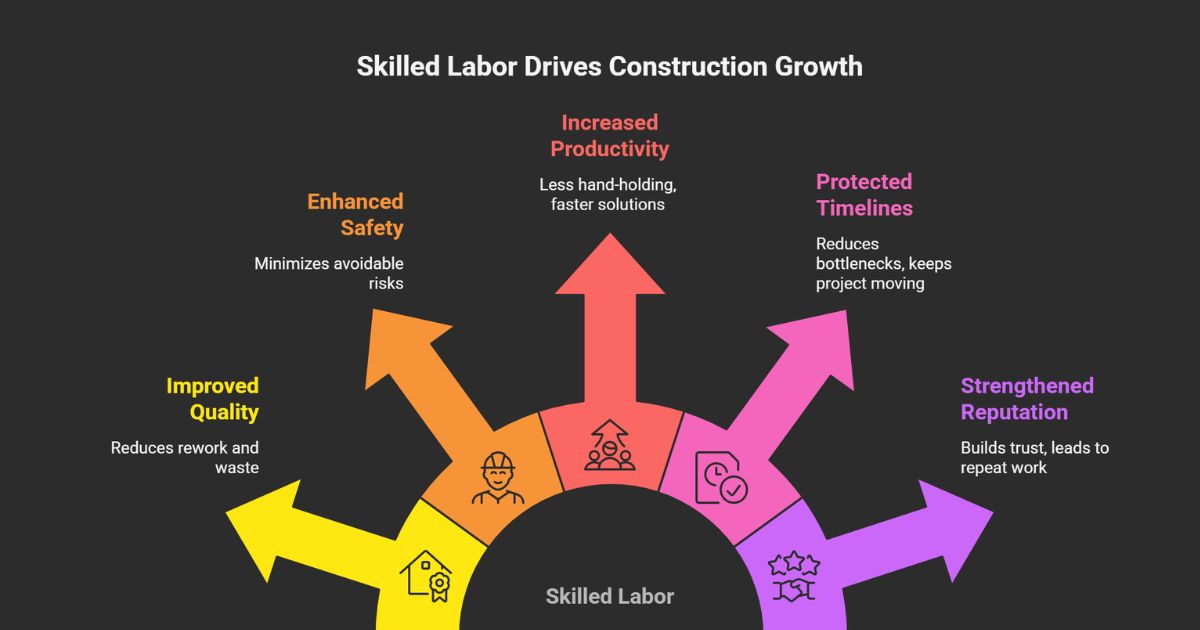
First, skilled labor improves quality. A trained tradesperson is more likely to install systems correctly the first time. That reduces rework, material waste, inspection failures, and client complaints. In construction, mistakes do not stay small. They spread like cracks in a foundation. One poor install can delay five other tasks.
Second, skilled labor supports jobsite safety and compliance. Workers who understand their trade and site rules are less likely to create avoidable risks. They are also more likely to spot hazards early. That keeps crews safer and protects the company from preventable problems.
Third, skilled workers improve productivity. They need less hand-holding. They can read plans, solve issues faster, and coordinate better with other trades. A strong crew does not just work hard. It works in rhythm.
Fourth, skilled labor protects timelines. Schedules are built like domino rows. If one crew falls behind, the next crew often waits. Skilled workers reduce bottlenecks and keep the project moving.
Finally, they strengthen their reputation. Clients remember projects that finish well, pass inspections, and avoid chaos. General contractors remember subcontractors who show up with real Trade outlook professionals, not warm bodies. That trust leads to repeat work, referrals, and stronger margins over time.
In short, skilled construction workers are not just workers. They are business assets.
Benefits of Hiring Skilled Construction Workers for Contractors and Construction Firms
The benefits of skilled labor show up in different ways depending on your role in the business.
For Construction Company Owners
Owners care about profit, stability, and reputation. Skilled labor supports all three. Better execution means fewer errors, less waste, and stronger schedule control. That protects margins. It also builds a reputation for reliability, which helps win better projects and stronger client relationships.
A company with the right workforce can bid with more confidence because it knows it can actually deliver.
For General Contractors
General contractors need coordination across multiple trades. One weak crew can throw off an entire schedule. Skilled construction workers reduce that risk. They follow the sequence better, communicate faster, and complete work with fewer surprises.
When strong trade professionals are on site, the project feels less like a fire drill and more like a well-run operation.
For Subcontractors
Subcontractors compete on performance, speed, and consistency. Skilled workers help them stay competitive. They reduce callbacks, improve finish quality, and support better site relationships with general contractors. That matters because repeat work often goes to the subs who make life easier, not harder.
For Project Managers and Site Supervisors
Project managers and supervisors carry a heavy load. They track progress, solve problems, coordinate trades, and manage site pressure. Skilled workers reduce the amount of daily corrections needed. That frees up leadership time for planning and control rather than constant repair.
It is like having a team that drives with you instead of forcing you to push the truck uphill every day.
For HR, Recruitment, and Operations Managers
Hiring teams need workers who stay, perform, and fit the job. Skilled construction workers often improve workforce stability because they understand the role, the expectations, and the trade itself. Operations managers also benefit from better workforce planning because reliable people make staffing easier to forecast.
This is where staffing partners can also add real value. That saves internal teams time and helps companies avoid the cycle of rushed hiring and poor retention.
The Current Skilled Construction Labor Shortage: What Is Causing It?
The shortage of skilled construction workers did not appear overnight. It has been building for years, and several forces are pushing it at once.
One major factor is the aging workforce. Many experienced tradespeople are nearing retirement or have already left the field. When they go, they take years of field knowledge with them. Construction does not lose just a headcount. It loses judgment, speed, and practical know-how.
At the same time, fewer younger workers have entered the trades in strong enough numbers. For years, many schools and families pushed four-year college paths harder than trade careers. That helped create a gap between labor demand and talent supply.
Demand has also grown. Infrastructure work, industrial expansion, housing needs, renovation projects, and commercial development all pull from the same labor pool. When more projects start at once, competition for skilled tradespeople rises fast.
There is also a readiness problem. Some applicants want construction jobs but do not yet have the field-ready skills employers need. That creates a skills gap. A worker may be willing, but not yet able, to perform specialized work safely and efficiently.
Geography plays a role, too. Some regions have stronger labor pools than others. A market can have plenty of projects and not enough workers, while another area may have talent that is harder to mobilize. This mismatch creates labor shortages even when workers exist somewhere else.
For employers, the result is familiar: harder recruiting, longer time-to-fill, rising wage pressure, more overtime, more poaching by competitors, and a higher risk of turning down work.
The shortage is not just a staffing problem. It is an operations problem, a revenue problem, and in some cases a growth problem. Companies that solve it gain a serious edge.
Signs Your Business Needs More Skilled Construction Workers
Sometimes the need is obvious. Sometimes it creeps in slowly. Either way, there are warning signs that your workforce is not keeping up with project demand.
The first sign is schedule slippage. If projects keep falling behind, labor may be part of the issue. Not every delay is caused by staffing, but weak trade coverage often sits near the center of the problem.
The second sign is growing rework. When crews install things incorrectly, rush tasks, or struggle with quality, the hidden cost can be huge. Rework eats up time twice.
Another sign is rising over time. Overtime may solve short-term gaps, but too much of it usually signals an understaffed or misaligned workforce. It also increases fatigue, which can drive errors and Construction safety risks.
You should also pay attention if supervisors are stretched too thin. When leaders spend too much time correcting basic work, chasing attendance, or reassigning tasks, it often means the team is missing the right level of skilled labor.
More safety issues, inspection problems, or callbacks are also clear signals. So is turning down work because you do not trust your labor capacity.
If your business feels like it is always reacting instead of operating with control, it may be time to strengthen your skilled workforce.
How to Find Skilled Construction Workers
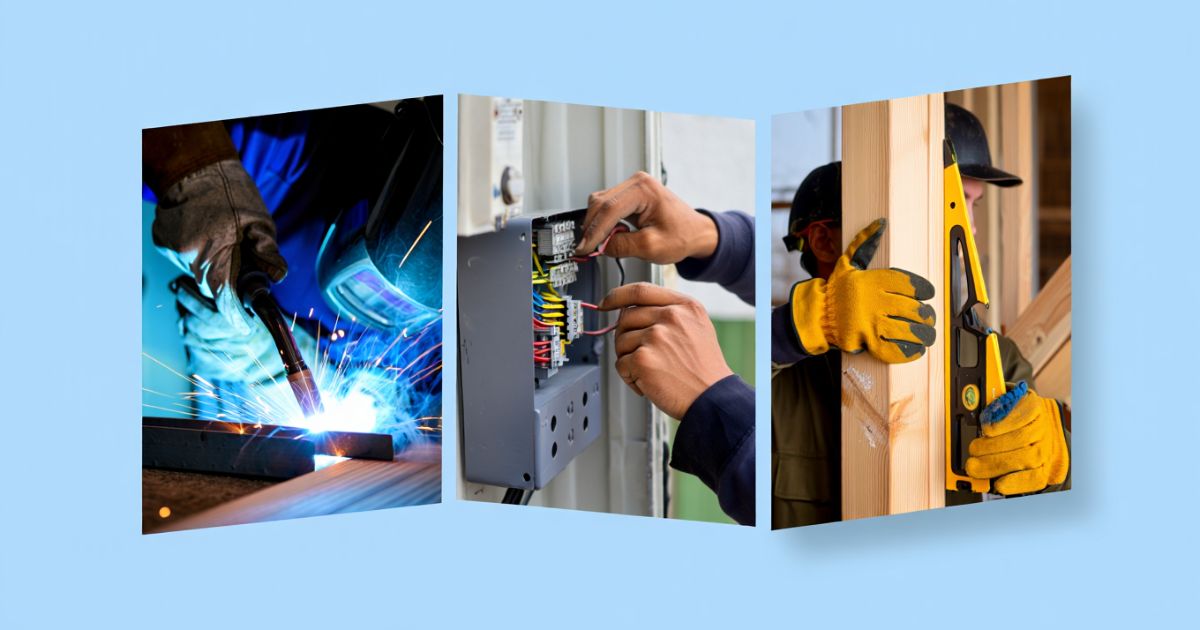
Finding skilled construction workers today takes more than posting one ad and hoping for the best. The strongest hiring strategies use multiple channels at once.
Build a Strong Local Recruiting Pipeline
Start close to the work. Trade schools, vocational programs, and Apprenticeship partnerships can help create a future talent pipeline. These channels are especially useful when you want workers you can train into long-term roles.
Local recruiting also improves fit. Workers who live near the project are often easier to mobilize, retain, and schedule.
Use Construction-Focused Recruiting Channels
General job boards can help, but trade-specific recruiting channels often perform better for skilled roles. Use job descriptions that clearly explain the trade, certifications, tools, project type, location, schedule, and pay range. Skilled workers usually skip vague ads.
Tap Referrals and Field Networks
Referrals still matter in construction. Good workers often know other good workers. Ask your top employees, supervisors, foremen, and subcontractor contacts who they trust. A strong referral often gives you more insight than a polished resume.
Rehire Proven Workers
If a worker performed well on a past project, keep that relationship warm. Many companies spend too much time chasing unknown talent while ignoring people who have already proved themselves. A solid rehire list can become one of your best assets.
Use Digital Recruiting More Smartly
Today’s skilled workers are not all actively searching, but many can still be reached through targeted digital recruiting. That includes industry groups, trade communities, mobile-friendly ads, and social recruiting. The key is speed. A slow follow-up process loses good candidates fast.
Work With a Construction Staffing Partner
When internal teams are overloaded or projects move fast, a staffing partner can shorten the search. A strong construction staffing agency can help source, pre-screen, and deliver workers that fit project needs.
improve workforce flexibility, and connect with skilled labor for urgent or ongoing projects. For owners and operations leaders, that means less time stuck in the hiring maze and more time focused on project delivery.
The best recruiting strategy is rarely one channel. It is a layered system built for speed, fit, and consistency.
How to Hire the Right Skilled Construction Workers
Finding candidates is one challenge. Hiring the right ones is another.
The first step is writing a job description that reflects the real job, not a generic template. Spell out the trade, work environment, experience level, certifications, tools used, travel needs, shift expectations, and project type. Clear posts attract better matches.
Next, screen for field-ready experience. Do not just ask where someone worked. Ask what they did, what systems they installed, what materials they used, what plans they read, and what responsibilities they handled without supervision.
Practical assessment matters too. For some roles, hands-on testing or trade-specific interview questions can reveal far more than a resume. A short skills check can save months of frustration later.
You should also assess soft skills. In construction, reliability is a performance trait. So are communication, safety awareness, teamwork, and problem-solving. A technically capable worker who cannot follow the process or coordinate with others can still slow the site down.
Safety knowledge is another must-check area. Skilled workers should understand trade risks, site expectations, personal protective equipment, and how to work without creating danger for other crews.
Finally, match the worker to the job, not just the title. A commercial electrician may not be the right fit for every industrial project. A great carpenter may not be strong in finish work. Skill fit matters as much as experience length.
Speed also matters. Good candidates do not stay on the market for long. The best hiring systems move fast without becoming careless. That means fewer interview layers, faster supervisor feedback, and clear next steps.
When internal teams struggle to do that at scale, outside support can help. BluebixInc helps companies streamline hiring by reducing search time and supporting access to qualified talent that better matches project scope and workforce needs.
What to Look for in Skilled Construction Workers
When employers talk about construction workers’ skills, they often focus only on trade ability. That is important, but it is not the whole picture.
Yes, technical trade expertise comes first. A skilled worker should know the tools, materials, installation methods, and quality standards of the role.
They should understand the sequence of work and the common problems that show up in real field conditions.
But the best skilled construction workers also bring a safety-first mindset. They do not treat safety like a poster on the wall. They build it into how they work.
Problem-solving ability matters too. Jobsites change. Materials arrive late. Conditions shift. Plans sometimes clash with reality. Strong workers do not freeze when this happens. They think, adjust, and communicate.
Blueprint reading is another valuable trait. Workers who can read plans and specs with confidence reduce errors and work more independently.
Reliability may be the most underrated skill of all. Showing up on time, staying accountable, and finishing work consistently can make a worker more valuable than someone with stronger technical ability but weaker discipline.
Communication also matters more than many employers admit. Construction is a team sport. Even the best tradesperson creates friction if they cannot coordinate with others.
In short, the right hire is not just skilled with tools. The right hire is skilled at work.
Skilled Construction Workers vs. General Labor: Which Do You Need?
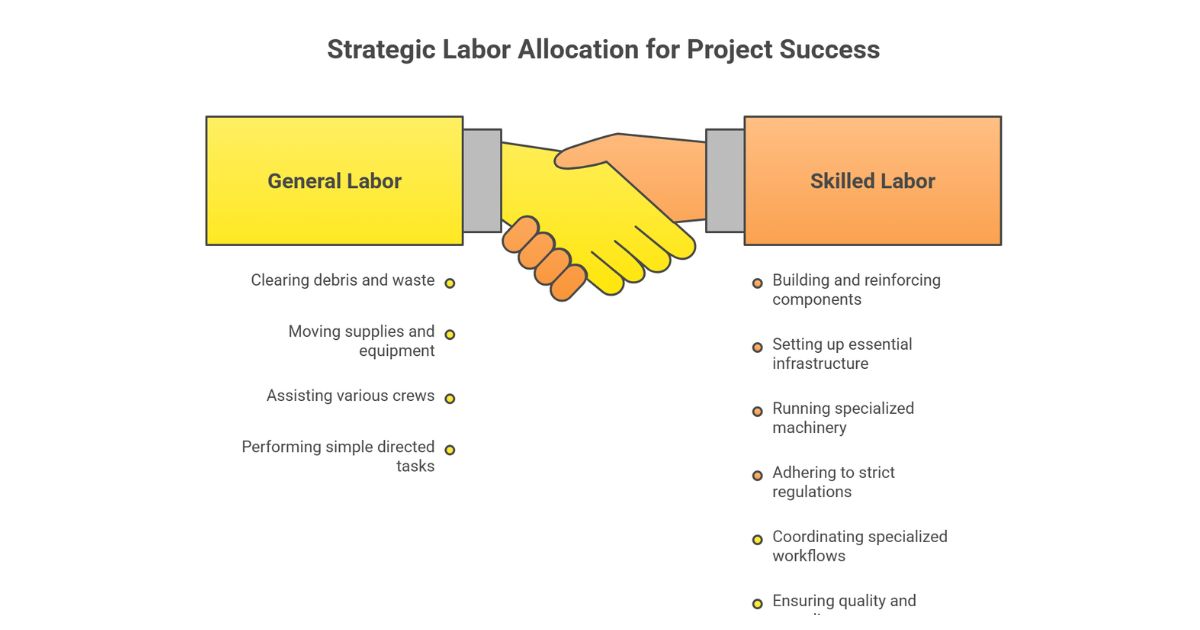
Not every role needs skilled labor, but many tasks do.
General labor is often enough for site cleanup, material handling, basic support tasks, or simple repetitive work performed under direction. These workers are important. They keep the site moving and support crews across many stages of the project.
But when work involves structure, systems, equipment operation, code-sensitive installation, trade sequencing, or inspection requirements, skilled labor becomes non-negotiable.
This is where many hiring mistakes begin. Some companies try to save money by using underqualified workers for specialized tasks. On paper, the hourly rate looks better.
In practice, the total cost can rise. Mistakes, delays, rework, supervision time, and safety risks often erase any early savings.
It is like buying the cheapest boots for a muddy jobsite. You may save money at first, but if the boots fail halfway through the day, the real cost ends up higher.
The smarter approach is to match labor type to task complexity. Use general labor where it makes sense. Use skilled construction workers where performance, safety, and quality truly depend on trade expertise.
Permanent Hiring vs. Temporary Staffing vs. Subcontracting: Best Workforce Options
There is no single labor model that fits every construction business. The best option depends on workload, schedule, specialization, and growth goals.
Permanent Hiring
Permanent skilled workers make sense when the role is core to your operation and likely to stay busy across multiple projects. This model supports stability, a stronger culture, and long-term skill retention. It works especially well for companies with steady demand.
Temporary Skilled Staffing
Temporary staffing helps when demand spikes, deadlines tighten, or a project needs short-term coverage. It gives employers flexibility without long-term payroll commitment. This can be useful for shutdown work, seasonal peaks, urgent backfills, or phased project ramps.
Subcontracting
Subcontracting works well when a project needs specialty capabilities your internal team does not handle or when you need added capacity without building a new department. It can also be the best choice when the scope is clearly defined, and results are easy to measure.
Hybrid Workforce Models
Many growing companies use a hybrid model. They keep a core team of permanent skilled workers, add temporary labor when projects surge, and subcontract specialized work as needed. This approach can balance control with flexibility.
The right model depends on three main questions: How often do you need the skill? How quickly do you need the worker? And how central is that role to your long-term business?
This is another area where companies can explore staffing options that support both immediate hiring needs and longer-term workforce planning. That flexibility helps construction firms respond faster without overextending internal teams.
How Skilled Construction Workers Improve Safety, Quality, and Timelines
Safety, quality, and schedule performance are tightly connected. Skilled workers improve all three.
They improve safety because they understand their trade risks. A trained heavy equipment operator moves with more control. A qualified electrician works with greater awareness.
A skilled roofer knows how to protect both themselves and their crew. Experience does not remove all risk, but it reduces preventable risk.
They improve quality because they know how the work should look and perform. They understand tolerances, sequencing, and standards.
They can spot issues before they grow. That means fewer failed inspections, fewer punch-list surprises, and fewer callbacks after handover.
They improve timelines because they work with more confidence and less correction. A skilled crew often solves small problems on the fly instead of waiting for constant direction. They coordinate better with surrounding trades and create fewer downstream delays.
Think of a project like a relay race. Skilled construction workers hold their section of the race with more control.
That is why hiring quality labor is not just a staffing decision. It is a project performance decision.
Common Hiring Challenges in the Construction Industry and How to Solve Them
Construction hiring rarely fails because employers do not care. It usually fails because the process is too slow, too broad, or too reactive.
One common problem is high turnover. Some workers leave for better pay, better treatment, shorter travel, or steadier work. Others were simply poor fits from the start.
Another challenge is competition. Skilled tradespeople often have options. If your process takes too long, another company will make the offer first.
Candidate no-shows are another pain point. That can happen when communication is weak, job details are unclear, or the hiring process loses momentum.
Skills mismatch is also common. Some applicants look strong on paper but lack the real field experience needed. That is why practical screening matters.
Wage pressure adds another layer. In tight labor markets, employers may need to adjust pay, perks, or schedule flexibility to stay competitive. This does not always mean paying the most. It means offering value clearly and honestly.
So how do you solve these challenges?
Start by tightening your job descriptions and making them trade-specific. Involve field leaders early in screening. Move faster on qualified candidates. Keep communication simple and direct. Build a bench of known workers instead of restarting every search from zero.
And when demand outruns internal capacity, use a staffing or recruiting partner that understands construction hiring. BluebixInc helps companies reduce delays in recruiting and improve access to workers who better match site, trade, and timeline needs.
The companies that hire the best are not always the biggest. They are often the clearest, fastest, and most organized.
Best Practices to Retain Skilled Construction Workers
Hiring matters, but retention matters just as much.
When skilled construction workers leave, the company loses more than labor hours. It loses site knowledge, team rhythm, and reliability. That loss often forces managers back into constant hiring mode.
Retention starts with compensation, but it does not end there. Competitive pay matters, especially in tight markets. So do benefits, travel expectations, schedule clarity, and dependable work.
Onboarding is another major factor. First impressions shape long-term commitment. A rushed first day can send the message that the company is disorganized. A clear first week builds confidence.
Training and upskilling also help retain good workers. Skilled tradespeople want to grow. When employers support certifications, tools training, leadership development, or cross-trade learning, workers often see a future with the company.
Culture matters too. Respect on the jobsite is not a “soft” issue. It affects performance, morale, and turnover. Workers stay longer where expectations are clear, leadership is steady, and safety is taken seriously.
Burnout is another hidden risk. Long hours, unstable scheduling, and constant pressure drive good workers away. Companies that plan labor more carefully often keep people longer.
Recognition helps as well. Skilled workers want to know that good work gets noticed. That does not always require grand programs. Consistent respect, fair treatment, and visible trust go a long way.
Finally, year-round continuity matters where possible. Construction can be seasonal or project-based, but companies that create smoother work transitions often protect retention better.
Technology, Training, and the Future of Skilled Construction Labor
Construction is changing, and skilled labor is changing with it.
Today’s skilled construction workers often need to do more than use tools. They may need to read digital plans, work around advanced equipment, coordinate with prefabrication systems, or adapt to new building methods.
Technology is not replacing skilled trades. In many cases, it is raising the skill bar. Workers still need strong hands-on ability, but now they also benefit from digital awareness, system understanding, and flexible learning.
Training plays a key role here. Employers who invest in upskilling are not just helping workers. They are protecting future productivity. A worker who learns new tools or methods becomes more valuable across more types of projects.
This matters because future labor demand will likely favor workers who combine traditional trade strength with modern jobsite adaptability. The companies that prepare now will be in a stronger position later.
In practical terms, that means building talent pipelines, supporting apprenticeships, improving onboarding, and using technology as a support tool rather than a shortcut.
The future will still belong to people who can build well. The difference is that the definition of “build well” is expanding.
How a Construction Staffing Partner Can Help Solve Skilled Labor Shortages

When projects move fast, and internal hiring teams are stretched, a staffing partner can act like an extra set of hands at the exact moment the pressure rises.
A good construction staffing partner helps shorten the time between need and placement. That matters when open roles are delaying progress, driving overtime, or pulling supervisors away from higher-value work.
Staffing partners can also help with fit. Instead of sorting through large volumes of uncertain applicants, companies can focus on workers who already match trade, project type, and timeline needs more closely.
This support is useful for urgent backfills, seasonal surges, specialty roles, and long-term workforce planning. It also gives companies more flexibility when project demand changes quickly.
BluebixInc supports businesses by helping them access staffing solutions that reduce hiring friction and improve workforce responsiveness.
For companies facing real labor pressure, that kind of support can make the difference between chasing labor and controlling labor.
Conclusion: Building Stronger Projects Starts With Skilled Construction Workers
Skilled construction workers do far more than fill a shift. They protect quality, strengthen safety, improve schedules, reduce rework, and support long-term business growth.
For construction company owners, general contractors, subcontractors, project managers, site supervisors, HR teams, recruitment leaders, and operations managers, the message is clear: the right workforce is one of the strongest advantages a company can build.
If your projects are slowing down, your supervisors are overloaded, or your hiring process is not producing dependable trade professionals, now is the time to act. Review your labor strategy, tighten your hiring process, strengthen retention, and use the right workforce model for each project.
And if your team needs extra support, Bluebix Inc can help companies find more effective staffing solutions. Better people build better projects. That truth has not changed, and it likely never will.
FAQ
What is the biggest mistake contractors make when hiring skilled construction workers?
The biggest mistake is hiring only for speed or hourly rate instead of verified skill, reliability, and safety readiness.
A cheaper worker can become more expensive through rework, delays, supervision time, and avoidable issues.
How can small construction companies compete for skilled workers against larger firms?
Small companies can compete by moving faster, communicating clearly, offering a respectful site culture, and creating steady work opportunities.
Many skilled workers value trust, consistency, and strong leadership as much as pay. A better hiring experience and better day-to-day treatment can help smaller firms win strong talent.
Are certified workers always better than experienced workers without formal credentials?
Not always. Certifications matter, especially in code-sensitive or regulated roles, but hands-on field experience matters too.
The best hires usually combine trade knowledge, safety awareness, and proven jobsite performance. Employers should evaluate real ability, work history, and project fit instead of relying only on credentials.
When should a contractor use temporary skilled labor instead of direct hiring?
Temporary skilled labor works well during peak workloads, urgent deadlines, seasonal demand, outages, or short-term project phases.
Direct hiring is often better for core roles needed across many jobs. The right choice depends on project duration, labor predictability, budget, and how quickly productive workers are needed.
How do skilled construction workers affect project profitability?
Skilled workers improve profitability by reducing rework, supporting faster completion, improving quality, and lowering the cost of mistakes.
They also reduce the need for constant supervision. Even when hourly pay is higher, the total project outcome is often better because fewer errors and delays eat into profit.
What should project managers look for beyond trade skills?
Project managers should look for reliability, communication, safety habits, blueprint reading, teamwork, and calm problem-solving.
A worker can be technically strong and still cause site issues if discipline is weak. The best skilled construction workers combine trade ability with professionalism and consistent jobsite behavior.
Why is retaining skilled construction workers just as important as hiring them?
Retention protects productivity, site knowledge, and team rhythm. Constant turnover creates hidden costs through retraining, slower progress, and repeated hiring pressure.
When skilled workers stay longer, projects run more smoothly, supervisors spend less time fixing labor problems, and companies build stronger long-term operating stability.
How can HR managers improve construction hiring quality quickly?
HR managers can improve quality by using trade-specific job descriptions, screening for real field experience, involving supervisors early, and shortening decision time.
Practical skill checks also help. Strong hiring quality usually comes from clearer requirements, faster communication, and better alignment between HR, operations, and field leadership.
Is the skilled labor shortage temporary or a long-term issue?
For many employers, it is a long-term issue. Retirements, training gaps, rising project demand, and labor competition continue to affect the market.
Companies that improve recruiting, retention, workforce planning, and staffing flexibility are more likely to stay ahead instead of reacting to labor shortages again and again.