


11 Must-Know Insights for a Successful Priority Infrastructure Plan
A priority infrastructure plan is no longer optional—it’s a critical strategy for modern businesses aiming to stay competitive, resilient, and scalable. Whether you’re managing a manufacturing unit, healthcare facility, or digital enterprise, your infrastructure directly impacts productivity, costs, and workforce efficiency.
In today’s fast-changing environment, decision-makers must prioritize the right systems, assets, and resources to avoid costly disruptions. This guide breaks down how infrastructure planning strategy, business continuity planning, and critical infrastructure management work together to support growth. If you want fewer surprises and more control over operations, this is where you start.
2. What is a Priority Infrastructure Plan?
2.1 Definition and Core Concept
A priority infrastructure plan is a structured approach to identifying, ranking, and managing the most critical assets, systems, and resources that keep a business running. Think of it as a survival blueprint—it tells you what must never fail.
2.2 Key Objectives of Infrastructure Prioritization
- Risk Reduction: Prevent breakdowns that can halt operations
- Operational Efficiency: Keep systems running smoothly
- Cost Optimization: Spend where it matters most
2.3 Types of Infrastructure Covered
- Physical Infrastructure: Facilities, machinery, equipment
- Digital Infrastructure: IT systems, cloud, cybersecurity
- Workforce Infrastructure: Talent, skills, staffing systems
A strong infrastructure prioritization strategy ensures your business doesn’t treat all assets equally—because not everything is equally important.
3. Why Businesses Need a Priority Infrastructure Plan (Expanded)
3.1 Minimizing Downtime and Risk
Downtime is one of the most expensive problems a business can face, yet it often starts with small, unnoticed issues—like outdated systems, delayed maintenance, or poor coordination between teams. Think of it like a leaking pipe: at first, it seems minor, but over time, it can flood your entire operation.
A priority infrastructure plan helps businesses identify critical assets and weak points before they fail. Instead of reacting to problems after they occur, companies can take a proactive approach—fixing vulnerabilities early, scheduling maintenance at the right time, and ensuring backup systems are in place.
For example, in manufacturing, a single machine breakdown can stop an entire production line. In healthcare, system downtime can delay patient care.
3.2 Supporting Workforce Planning and HR Strategy
Your workforce is only as effective as the infrastructure supporting it. Even the most skilled employees cannot perform at their best if systems are slow, tools are outdated, or workflows are inefficient. This is where a priority infrastructure plan plays a critical role in workforce optimization.
A well-structured plan also helps reduce burnout and inefficiencies. When employees don’t have to deal with constant system failures or delays, they can focus on delivering value. In industries like healthcare and manufacturing, this directly impacts service quality, safety, and overall performance.
3.3 Aligning Procurement and Vendor Decisions
Procurement teams often face challenges in deciding where to allocate budgets and which vendors to prioritize. Without a clear infrastructure plan, spending can become reactive—leading to unnecessary purchases, delays, and supplier risks.
For example, if a logistics company identifies transportation systems as a top priority, procurement can focus on maintaining fleet reliability and securing backup suppliers. This reduces the risk of delays and ensures continuity in operations.
In short, infrastructure planning transforms procurement from a reactive function into a strategic partner that supports business goals.
3.4 Enhancing Scalability and Growth
Growth is exciting—but without the right infrastructure, it can quickly become overwhelming. Expanding operations without proper planning is like building a house on sand: it may look stable at first, but cracks will appear over time.
For example, a company planning to expand into new markets must ensure its IT systems can handle increased traffic, its supply chain can manage higher demand, and its workforce has the tools to operate efficiently. Without this preparation, growth can lead to inefficiencies, higher costs, and customer dissatisfaction.
4. Key Components of an Effective Priority Infrastructure Plan (Expanded, Focused)
4.1 Asset Identification and Classification
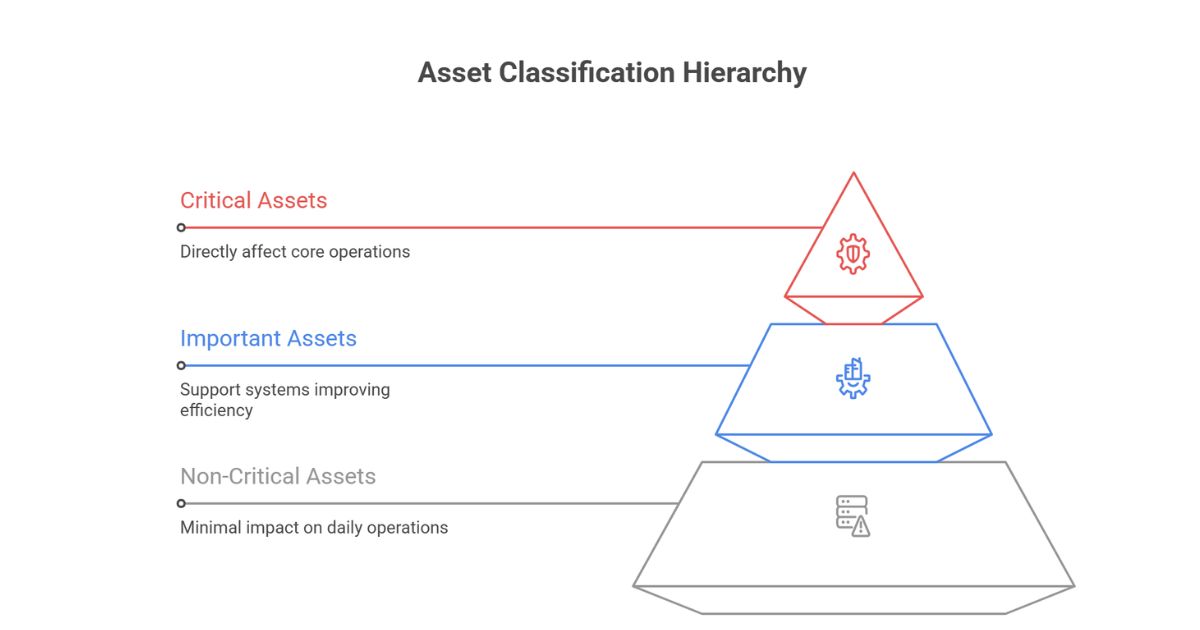
Start by creating a complete list of all infrastructure assets across your organization—physical, digital, and workforce-related. This includes machinery, facilities, IT systems, software, networks, and critical roles or skill sets.
Once listed, classify each asset based on its business impact and operational dependency:
- Critical (Tier 1): Systems that directly affect core operations (e.g., production machines, servers)
- Important (Tier 2): Support systems that improve efficiency but don’t stop operations if they fail
- Non-Critical (Tier 3): Assets with minimal impact on daily operations
This classification ensures your team focuses time, budget, and attention where it matters most.
4.2 Risk Assessment and Impact Analysis
After classification, evaluate the risk associated with each asset. The key question is simple:
What happens if this fails?
Measure risk using:
- Likelihood of failure (high, medium, low)
- Impact on operations (financial loss, downtime, safety risks)
High-impact and high-risk assets must be prioritized first. For example, a server supporting business operations has a higher priority than a backup reporting tool.
This step helps prevent unexpected disruptions and ensures preparedness.
4.3 Budget Allocation and Cost Forecasting
Effective planning is not about spending more—it’s about spending smart. Allocate budgets based on priority levels:
- Invest more in critical infrastructure
- Optimize or delay spending on low-impact assets
Use CAPEX planning to forecast:
- Maintenance costs
- Upgrade investments
- Replacement timelines
This approach reduces waste, improves ROI, and ensures financial resources are aligned with business priorities.
4.4 Timeline and Implementation Roadmap
A strategy without execution is ineffective. Define a clear roadmap with:
- Short-term actions (immediate fixes and risk mitigation)
- Mid-term plans (system upgrades and improvements)
- Long-term goals (scaling and modernization)
Set deadlines and assign responsibilities to departments like operations, HR, and procurement. This keeps implementation structured and measurable.
4.5 Monitoring and Performance Metrics
Once implemented, continuously track performance using key metrics such as:
- System uptime and downtime
- Operational efficiency levels
- Maintenance costs vs. budget
- Productivity impact
Regular monitoring ensures the plan stays relevant and adapts to changing business needs. It also allows quick adjustments when performance drops or risks increase.
5. How to Create a Priority Infrastructure Plan (Step-by-Step)
5.1 Conduct Infrastructure Audit
Review all systems, assets, and processes. Identify what exists and its current condition.
5.2 Identify Critical Operations and Dependencies
Map out dependencies—what systems rely on others? This reveals hidden risks.
5.3 Rank Infrastructure Based on Priority
Use a scoring system:
- High impact = High priority
- Medium impact = Moderate priority
- Low impact = Low priority
5.4 Develop Contingency Plans
Prepare for worst-case scenarios. Backup systems, alternative vendors, and emergency workflows are essential.
5.5 Assign Roles Across Departments
- HR → Workforce alignment
- Operations → Execution
- Procurement → Vendor management
This step-by-step approach turns planning into action.
6. Priority Infrastructure Planning for Workforce Optimization (Expanded, Focused)
6.1 Aligning Infrastructure with Workforce Demand
Workforce growth must match infrastructure capacity. If employee numbers increase without upgrading systems, tools, or workspace, productivity declines.
Ensure alignment by:
- Matching system capacity (IT, tools, equipment) with workforce size
- Planning infrastructure upgrades before hiring expansion
- Avoiding bottlenecks in operations and communication
Balanced growth ensures employees can perform efficiently without delays or system limitations.
6.2 Role of HR and Workforce Planners
HR and workforce planning teams play a direct role in infrastructure success. Their responsibility is to ensure employees have the right environment, tools, and systems to perform their roles effectively.
Key responsibilities include:
- Aligning hiring plans with infrastructure readiness
- Identifying operational gaps affecting employee performance
- Coordinating with IT and operations for system support
This alignment improves productivity and reduces inefficiencies.
6.3 Reducing Skill Gaps Through Strategic Planning
Infrastructure planning reveals where skills are missing. For example, new systems or technologies may require specialized expertise that the current workforce lacks.
Address this by:
- Identifying required skills based on infrastructure needs
- Hiring or training employees proactively
- Building a workforce that supports current and future systems
This approach prevents delays and ensures smooth operations.
6.4 Supporting Remote and Hybrid Work Models
Modern businesses require flexible work environments. Infrastructure must support remote and hybrid teams through:
- Cloud-based systems for secure access
- Reliable communication and collaboration tools
- Remote access to critical platforms
Strong digital infrastructure ensures employees can work efficiently from any location without compromising performance or security.
7. Industry-Specific Use Cases (Expanded, Focused)
7.1 Manufacturing & Production Facilities
In manufacturing, infrastructure failure directly stops production. The priority is to keep operations running without interruption.
Key focus areas:
- Machinery and equipment: Regular maintenance and backup planning
- Production lines: Identify critical machines that can halt output
- Supply chain systems: Ensure raw materials and parts are always available
- Maintenance schedules: Prevent breakdowns through planned servicing
A strong priority plan reduces downtime, protects output, and maintains delivery timelines.
7.2 Healthcare Infrastructure Planning
In healthcare, infrastructure is directly tied to patient outcomes. Failures here can affect safety, compliance, and care quality.
Key focus areas:
- Patient care systems: Electronic records, monitoring systems, and medical equipment
- Staffing infrastructure: Ensuring qualified staff are available when needed
- Compliance and regulations: Meeting healthcare standards and legal requirements
- Emergency readiness: Backup systems for critical operations
Reliable infrastructure ensures continuous care, reduces risk, and supports better patient outcomes.
7.3 IT & Digital Infrastructure
For digital businesses, infrastructure is the backbone of operations. Any failure can disrupt services, data access, and customer experience.
Key focus areas:
- Cloud systems: Scalable and secure data storage
- Cybersecurity: Protecting systems from threats and breaches
- Data management: Ensuring data availability and accuracy
- System uptime: Maintaining continuous service availability
Prioritizing digital infrastructure improves reliability, security, and performance.
7.4 Supply Chain & Logistics
In logistics, delays and disruptions directly impact delivery and customer satisfaction. Infrastructure must support speed and reliability.
Key focus areas:
- Transportation systems: Fleet reliability and route optimization
- Warehousing: Efficient storage and inventory management
- Vendor networks: Reliable suppliers and backup options
- Tracking systems: Real-time visibility of shipments
A prioritized infrastructure plan ensures smooth operations, reduces delays, and improves service delivery.
8. Common Challenges and How to Overcome Them (Expanded, Focused)
8.1 Budget Constraints
Limited budgets make it difficult to upgrade or maintain all infrastructure at once. Spreading resources too thin reduces effectiveness.
Solution:
Prioritize spending on high-impact and critical assets first. Delay or optimize low-priority investments. Use phased budgeting to manage costs while maintaining operational stability.
8.2 Lack of Data or Visibility
Without clear data, businesses cannot identify which assets are critical or at risk. This leads to poor decisions and reactive management.
Solution:
Use analytics tools and monitoring systems to gain real-time visibility into infrastructure performance. Data-driven insights improve accuracy in planning and prioritization.
8.3 Resistance to Change
Teams often resist new systems or processes due to uncertainty or lack of understanding. This slows down implementation.
Solution:
Educate stakeholders on the benefits and ROI of infrastructure planning. Provide training and involve teams early to improve adoption and reduce resistance.
8.4 Vendor and Procurement Delays
Delays in sourcing equipment or services can disrupt timelines and impact critical operations.
Solution:
Build strong vendor relationships and maintain backup suppliers. Plan procurement in advance to avoid last-minute delays and ensure continuity.
9. Benefits of Implementing a Priority Infrastructure Plan (Expanded, Focused)
9.1 Improved Operational Efficiency
A priority infrastructure plan ensures that critical systems and processes run without interruption. When high-impact assets are properly maintained and supported, operations become smoother and more predictable.
- Fewer system failures and delays
- Faster workflows and better coordination
- Reduced operational bottlenecks
This leads to consistent performance across departments.
9.2 Better Decision-Making
Clear visibility into infrastructure performance allows leaders to make informed decisions. Instead of reacting to issues, businesses can plan based on real data.
- Data-driven prioritization of resources
- Accurate forecasting and planning
- Faster response to risks and changes
This improves overall business control and strategic direction.
9.3 Cost Savings and ROI
A structured plan helps avoid unnecessary spending by focusing only on what matters most. It also reduces costs associated with downtime and emergency fixes.
- Lower maintenance and repair costs
- Reduced unplanned downtime expenses
- Better return on infrastructure investments
Smart allocation of resources improves financial efficiency.
9.4 Stronger Business Continuity
By identifying critical systems and preparing for potential failures, businesses can continue operations even during disruptions.
- Backup systems and contingency planning
- Reduced impact of unexpected failures
- Improved resilience during crises
This ensures stability and reliability in all conditions.
10. Tools and Technologies for Infrastructure Planning (Expanded, Focused)
10.1 Infrastructure Management Software
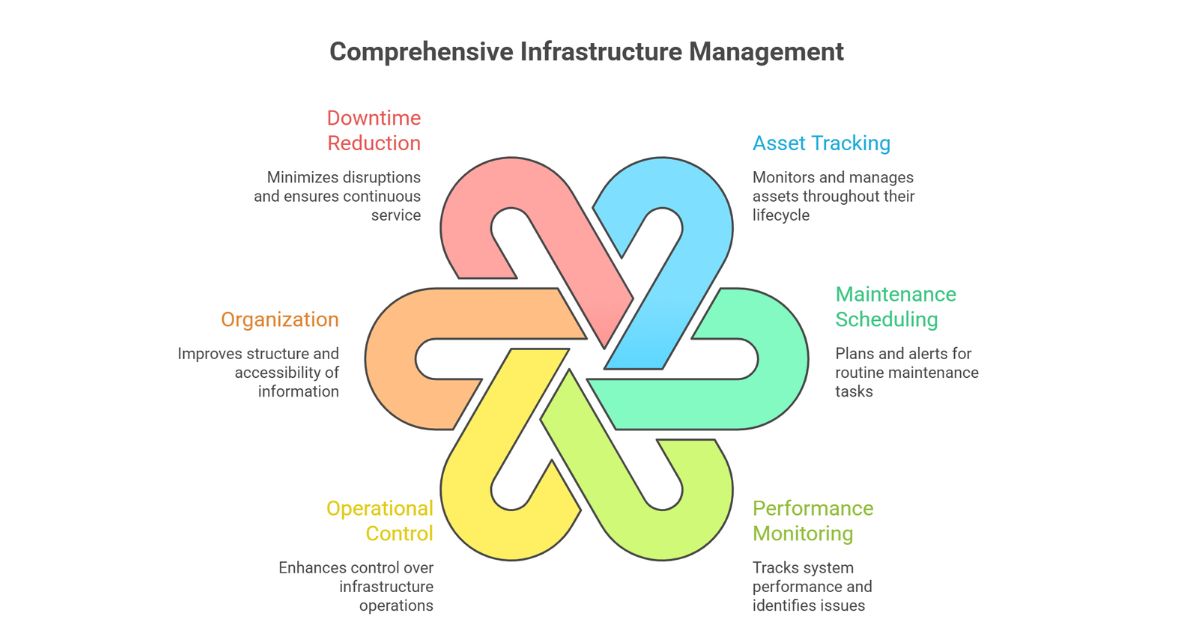
Infrastructure management software provides a centralized platform to track, manage, and monitor all assets and systems. It helps businesses maintain visibility and control over infrastructure performance.
Key functions:
- Asset tracking and lifecycle management
- Maintenance scheduling and alerts
- Performance monitoring across systems
This ensures better organization, reduced downtime, and improved operational control.
10.2 Data Analytics and AI Tools
Data analytics and AI tools enable businesses to move from reactive to predictive planning. They analyze large datasets to identify patterns and risks.
Key functions:
- Predicting system failures before they occur
- Optimizing resource allocation
- Supporting data-driven decision-making
These tools improve accuracy, reduce risks, and enhance efficiency.
10.3 Workforce Planning Platforms
Workforce planning platforms connect infrastructure needs with staffing service strategies. They ensure the right number of employees with the right skills are available when needed.
Key functions:
- Aligning hiring with operational demand
- Identifying skill gaps
- Supporting workforce forecasting
This improves productivity and ensures smooth operations.
10.4 Cloud-Based Monitoring Systems
Cloud-based systems provide real-time visibility into infrastructure performance from any location. They support scalability and remote management.
Key functions:
- Real-time system monitoring and alerts
- Remote access to infrastructure data
- Scalable storage and system management
These systems help businesses respond quickly to issues and maintain continuous operations.
11. Future Trends in Priority Infrastructure Planning (Expanded, Focused)
11.1 AI and Automation
AI and automation are transforming infrastructure planning from reactive to predictive. Systems can now analyze data, detect patterns, and identify risks before failures occur.
Key impact:
- Early detection of system issues
- Automated decision-making for maintenance and resource allocation
- Reduced manual intervention and faster response times
This improves reliability and minimizes operational disruptions.
11.2 Smart Infrastructure and IoT
Smart infrastructure uses IoT (Internet of Things) devices to connect systems, assets, and equipment. These connected systems provide real-time data and improve overall visibility.
Key impact:
- Continuous monitoring of infrastructure performance
- Real-time alerts for issues or inefficiencies
- Improved coordination between systems
This leads to better control, faster problem resolution, and higher efficiency.
11.3 Sustainability and Green Infrastructure
Businesses are increasingly focusing on sustainable infrastructure to reduce environmental impact and meet regulatory requirements.
Key impact:
- Energy-efficient systems and reduced resource consumption
- Lower operational costs over time
- Compliance with environmental standards
Sustainable infrastructure supports long-term business growth and responsibility.
11.4 Predictive Maintenance
Predictive maintenance uses data analytics to determine when systems need servicing—before failures occur.
Key impact:
- Reduced unexpected breakdowns
- Lower maintenance costs
- Extended asset lifespan
This approach ensures continuous operations and improves overall system performance.
12. Conclusion
A priority infrastructure plan is more than a strategy—it’s a business necessity. It helps reduce risks, improve efficiency, and support long-term growth. Companies that invest in infrastructure planning today are better prepared for tomorrow’s challenges.
If your organization wants to improve workforce performance, reduce costs, and scale confidently, now is the time to act. Platforms like Bluebix Inc help businesses align workforce planning with infrastructure needs, ensuring smoother operations and smarter hiring decisions.
Start planning today—because waiting costs more than preparing.
FAQs (10 Questions + Answers)
What makes an infrastructure priority in business planning?
A priority infrastructure is defined by its direct impact on critical operations. Systems, assets, or processes that, if disrupted, would halt production or service delivery are ranked highest. Businesses typically assess operational dependency, cost impact, and risk exposure to determine priority levels.
How often should a priority infrastructure plan be updated?
It should be reviewed quarterly or biannually, depending on business size and industry. Rapidly changing sectors like IT or healthcare may require more frequent updates. Regular updates ensure alignment with evolving risks, workforce demands, and technological changes.
Can small businesses benefit from infrastructure planning?
Yes, even small businesses benefit by avoiding costly disruptions. A simple plan helps prioritize limited resources, ensures operational continuity, and supports growth. It’s less about scale and more about strategic allocation of resources.
How does infrastructure planning support workforce management?
It ensures that the right tools, systems, and environments are available for employees to perform efficiently. It also helps HR teams align hiring plans with operational needs, reducing bottlenecks and improving productivity.
What role does procurement play in infrastructure planning?
Procurement ensures timely sourcing of critical assets and vendor reliability. It helps negotiate costs, manage supplier risks, and maintain supply continuity—key components of an effective infrastructure strategy.
Is digital infrastructure more important than physical infrastructure?
Both are equally critical. Digital infrastructure supports data, communication, and automation, while physical infrastructure ensures operational execution. The priority depends on business type, but modern organizations must balance both.
How can companies measure ROI from infrastructure planning?
ROI can be measured through reduced downtime, improved efficiency, cost savings, and increased productivity. Metrics like system uptime, operational output, and maintenance costs provide clear indicators of success.
What are the biggest risks of not having a priority infrastructure plan?
Businesses may face unexpected downtime, increased costs, inefficient operations, and poor workforce performance. Lack of planning often leads to reactive decisions, which are more expensive and less effective.
How does AI improve infrastructure planning?
AI enables predictive maintenance, risk forecasting, and smarter decision-making. It analyzes large datasets to identify patterns, helping businesses anticipate issues and optimize resource allocation proactively.
What is the difference between infrastructure planning and business continuity planning?
Infrastructure planning focuses on identifying and prioritizing assets and systems, while business continuity planning ensures operations continue during disruptions. Both work together—one prepares resources, the other ensures resilience.