

10 Proven Benefits of a Staffing Agency for Construction Workers (Hire Faster in 2026)
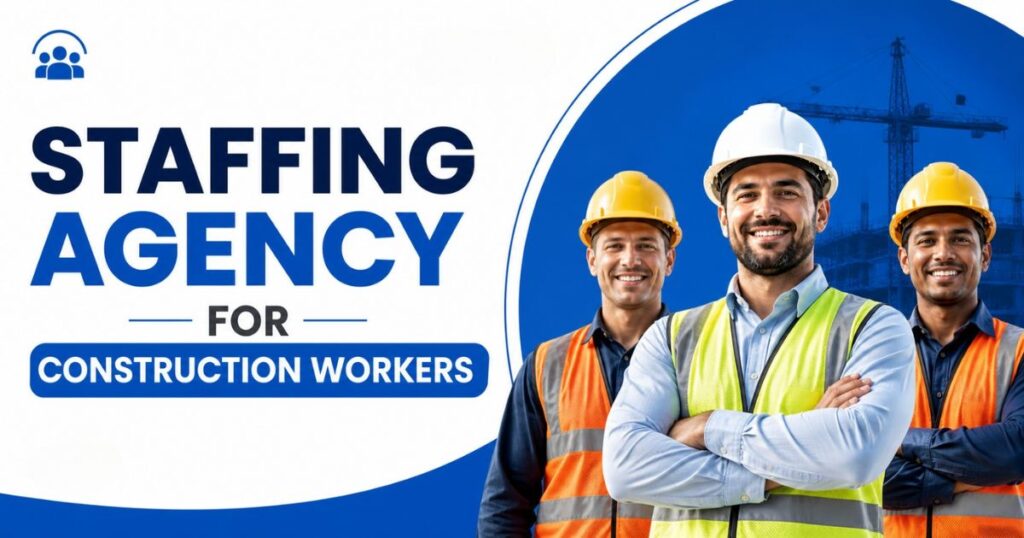
Finding reliable, skilled labor is one of the biggest challenges in the construction industry today. A staffing agency for construction workers can solve this problem faster than traditional hiring methods. Whether you’re a company owner, project manager, or HR professional, you need workers who show up ready, skilled, and compliant. But hiring takes time—and delays cost money.
In this guide, I’ll show you how construction staffing agencies work, why they’re essential in 2026, and how they help businesses reduce costs, improve productivity, and scale faster. If your goal is to build projects on time without hiring headaches, you’re in the right place.
What is a Construction Staffing Agency?
A construction staffing agency is a partner that helps companies hire workers quickly for short-term, long-term, or project-based roles. Think of it like a ready-made workforce pool—pre-screened, trained, and ready to deploy.
Key Functions:
- Sourcing skilled and unskilled labor
- Screening candidates (skills, background, certifications)
- Managing compliance and safety requirements
- Handling payroll (in many cases)
- Replacing workers when needed
Types of Staffing Services:
- Temporary Staffing: For short-term or urgent needs
- Contract Staffing: For project-based hiring
- Direct Hire: For permanent roles
Simple analogy: Hiring through a staffing agency is like ordering ready-to-cook ingredients instead of growing everything from scratch. It saves time, effort, and risk.
Why Construction Companies Struggle with Hiring
This section explains the key hiring challenges so you can clearly see why projects get delayed and where traditional hiring falls short.
Hiring in construction is difficult mainly because of a shortage of skilled workers. Roles like electricians, welders, and carpenters are in high demand, but there aren’t enough qualified people available.
At the same time, construction work is project-based, so workforce needs keep changing. Hiring for these changing demands through traditional methods is slow and inefficient.
There is also strong pressure on safety and compliance. Hiring the wrong worker can lead to accidents, legal issues, and costly delays.
On top of that, the hiring process itself takes too long, which doesn’t match the fast pace of construction projects.
In short, companies need quick hiring, skilled workers, and low risk—but traditional hiring often can’t deliver that.
Benefits of Using a Staffing Agency for Construction Workers
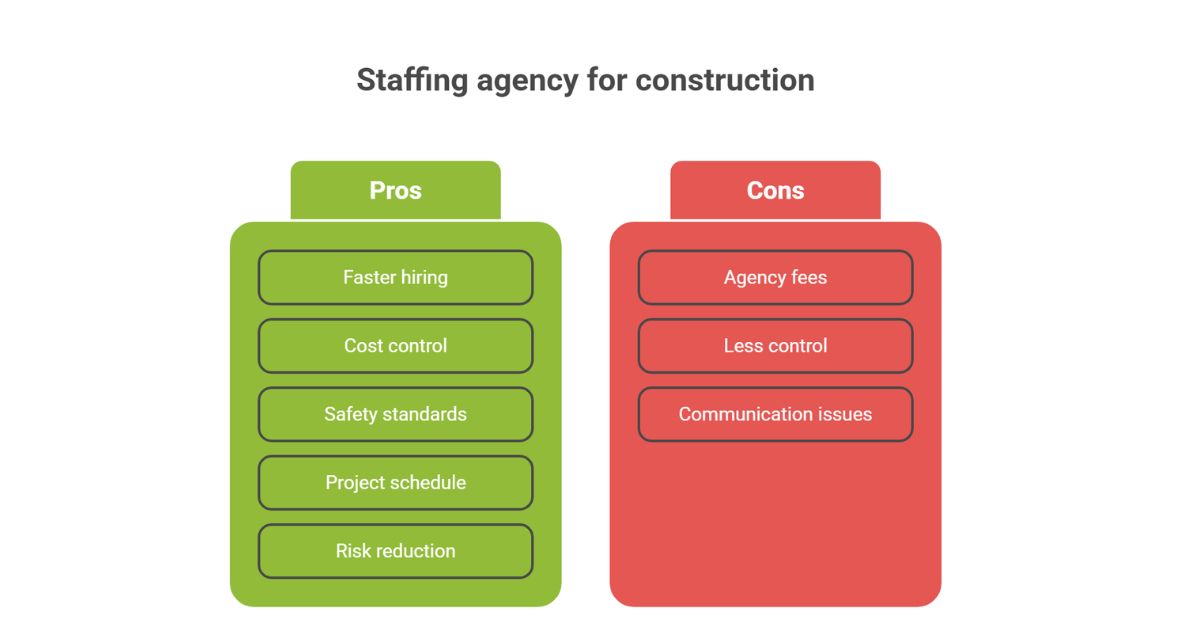
Hiring construction workers is not just about filling positions—it’s about keeping projects on schedule, controlling costs, and maintaining safety standards. A staffing agency for construction workers helps you achieve all three by simplifying and accelerating the hiring process while reducing operational risks.
1. Faster Hiring
Time is money in construction. Every day a position stays unfilled, your project timeline slips, and costs increase. Traditional hiring can take weeks—from posting jobs to screening and onboarding.
Staffing agencies solve this by maintaining a ready pool of qualified workers. Because candidates are already sourced and screened, agencies can deploy workers within 24 to 72 hours in most cases.
For project managers and supervisors, this means:
- No downtime waiting for hires
- Faster project execution
- Ability to meet tight deadlines without stress
In urgent situations—like a worker no-show or sudden project expansion—this speed can make the difference between meeting or missing a deadline.
2. Access to Pre-Vetted Talent
Finding skilled labor is difficult. Verifying their experience, certifications, and reliability takes even more time. Staffing agencies remove this burden.
They follow structured vetting processes that include:
- Skill assessments and trade tests
- Background checks
- Certification verification (safety, technical skills)
- Work history validation
This ensures that every worker sent to your site is job-ready and reliable.
For business owners and HR teams, this reduces:
- Hiring risk
- Chances of poor performance
- Time spent interviewing unqualified candidates
Instead of sorting through dozens of resumes, you get a shortlist of candidates who are already aligned with your requirements.
3. Workforce Flexibility
Construction demand is rarely consistent. One month you may need a small crew, and the next you may need to scale rapidly for a large project.
A staffing agency gives you the flexibility to:
- Scale your workforce up or down quickly
- Adjust team size based on project phases
- Hire workers only when needed
This flexibility is especially useful for:
- Seasonal projects
- Short-term contracts
- Unexpected workload increases
Without this support, companies often either overhire (leading to unnecessary costs) or underhire (causing delays). Staffing agencies help you maintain the right balance at all times.
4. Cost Efficiency
At first glance, staffing agencies may seem like an added expense. In reality, they help reduce overall hiring costs significantly.
When you hire independently, you incur costs such as:
- Job advertising and recruitment campaigns
- Time spent screening and interviewing
- Training and onboarding
- Turnover and rehiring costs
Staffing agencies absorb most of these responsibilities. You pay for ready-to-work talent, which lowers your total cost per hire.
Additionally, by reducing hiring time and improving worker quality, you avoid:
- Project delays
- Rework due to poor performance
- Safety-related expenses
For procurement and workforce planning teams, this translates into better budget control and predictable hiring costs.
5. Compliance & Safety Support
Construction is a high-risk industry with strict safety and labor regulations. Hiring workers who are not compliant can lead to:
- Legal penalties
- Project shutdowns
- Workplace accidents
Staffing agencies ensure that workers meet all required standards by:
- Verifying certifications and licenses
- Ensuring adherence to safety protocols
- Keeping up with labor laws and regulations
This reduces your liability and ensures a safer work environment.
For managers and business owners, this means peace of mind knowing that:
- Workers are qualified and compliant
- Risks are minimized
- Safety standards are consistently maintained
Types of Construction Workers You Can Hire
A staffing agency can provide workers across all levels:
General Labor
- Helpers
- Site cleaners
Skilled Trades
- Electricians
- Plumbers
- Welders
- Carpenters
Equipment Operators
- Crane operators
- Excavator operators
Supervisory Roles
- Site supervisors
- Project managers
Specialized Roles
- HVAC technicians
- Safety officers
This means you can build a complete workforce from one partner.BLS supports role-related sections with trusted labor data, job categories, and employment construction outlook for construction and extraction roles.
How Construction Staffing Agencies Work (Step-by-Step)
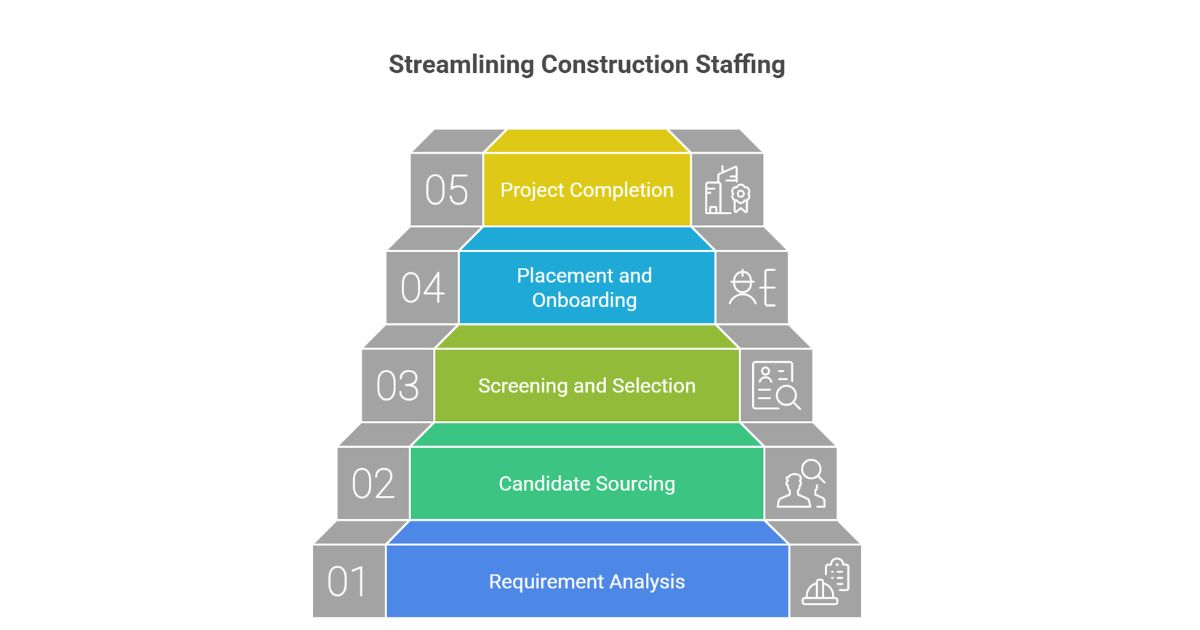
Understanding how a construction staffing agency works helps you see why it’s faster and more reliable than traditional hiring. The process is simple, structured, and designed to deliver qualified workers with minimal delay.
Step 1: Requirement Analysis
The process starts with understanding your exact needs. You share details like job roles, required skills, number of workers, project timeline, and location. This step ensures the agency clearly knows what type of workforce your project demands.
Step 2: Candidate Sourcing
Once requirements are defined, the agency looks into its existing talent pool and networks. Since agencies maintain databases of pre-registered workers, they can quickly identify candidates who match your needs without starting from scratch.
Step 3: Screening & Verification
Before sending workers, agencies conduct checks to ensure quality. This includes skill assessments, experience validation, certification checks, and basic background verification. This step reduces hiring risk and ensures workers are job-ready.
Step 4: Deployment
After selection, workers are assigned to your site. Because most formalities are already handled by the agency, deployment happens quickly, helping you avoid project delays.
Step 5: Ongoing Support
Staffing agencies don’t stop after placement. They provide continuous support, including replacements if a worker leaves, and scaling the workforce up or down based on project needs.
How to Choose the Right Construction Staffing Agency
Choosing the right construction staffing agency directly affects your project’s success. The wrong partner can cause delays, poor-quality hires, and compliance risks. The right one helps you hire faster, improve workforce quality, and stay on schedule.
Here are the key factors to focus on:
Industry Experience
Construction hiring is different from general recruitment. It requires knowledge of job roles, site conditions, and safety standards. Choose an agency that specializes in construction staffing. They understand the skills required and can match workers more accurately.
Vetting Process
A strong agency has a clear screening system. They should test skills, verify experience, and check certifications before sending candidates. This ensures you receive workers who are ready to perform from day one.
Compliance Knowledge
Construction involves strict safety and labor regulations. The agency must understand these requirements and provide workers who meet them. Proper certification and safety awareness reduce risks on-site.
Speed
Hiring speed matters in construction. Delays in workforce availability can slow down the entire project. A good staffing agency should have a fast turnaround time and be able to provide workers when you need them.
Reviews & Reputation
Always check client feedback, testimonials, or case studies. A reliable agency will have a proven track record of delivering quality workers and supporting projects successfully.
Cost of Hiring a Construction Staffing Agency
Understanding the cost of a construction staffing agency helps you see the real value behind the service. While there is a service fee, the overall impact is often cost-saving when you consider time, efficiency, and reduced risk.
Pricing Models
Most staffing agencies follow simple and transparent pricing structures:
Hourly Markup
You pay a fixed hourly rate for each worker. This rate includes the worker’s wages plus the agency’s fee. It’s commonly used for temporary or contract roles and gives flexibility for short-term projects.
Flat Fee
A fixed cost is charged for specific hiring needs or project-based staffing. This works well when hiring multiple workers for a defined scope.
Direct Hire Fee
For permanent roles, agencies charge a one-time fee, usually based on the candidate’s salary. This covers sourcing, screening, and placement.
Hidden Savings
The real value of staffing agencies is not just in pricing, but in the costs you avoid.
Reduced Turnover
Agencies provide better-matched candidates, which lowers the chances of workers leaving early. This saves time and rehiring costs.
No Training Costs
Workers are typically pre-skilled and job-ready. You don’t spend extra time or money on training.
Lower Compliance Risk
Agencies ensure workers meet safety and legal requirements. This reduces the risk of fines, accidents, or project disruptions.
Construction Staffing Trends in 2026
The construction industry is changing fast. Hiring is no longer just about filling positions—it’s about finding the right skills quickly, staying compliant, and adapting to new workforce models. Understanding these construction staffing trends in 2026 helps companies stay competitive and avoid delays.
AI in Hiring
Artificial intelligence is making recruitment faster and more accurate. Staffing agencies now use AI tools to match candidates based on skills, experience, and job requirements within minutes. This reduces manual screening and speeds up hiring decisions, helping companies fill roles without delays.
Gig Workforce Growth
More construction workers are choosing flexible, project-based work instead of long-term jobs. This shift allows companies to hire workers only when needed, improving cost control and workforce flexibility. Staffing agencies play a key role in managing this growing pool of on-demand talent.
Skill-Based Hiring
Employers are focusing more on what workers can do rather than just their past experience. Practical skills, certifications, and hands-on ability matter more than resumes. This approach improves job performance and ensures the right fit for specific project needs.
Compliance Focus
Safety and labor regulations are becoming stricter. Companies must ensure workers meet all legal and safety requirements. Staffing agencies help by verifying certifications and keeping up with changing laws, reducing the risk of penalties and workplace incidents.
How Staffing Agencies Improve Workforce Productivity
Productivity in construction depends on having the right workers at the right time. Even small gaps in staffing can slow progress, increase costs, and affect project quality. A construction staffing agency improves productivity by removing these gaps and ensuring your workforce stays efficient and reliable.
Faster Onboarding
Traditional hiring takes time—interviews, paperwork, and training can delay project start dates. Staffing agencies reduce this process by providing workers who are already screened and ready to work. This means they can join your site quickly and start contributing immediately, keeping projects on track.
Better Skill Matching
Productivity increases when workers are assigned tasks that match their skills. Staffing agencies carefully match candidates based on experience, trade expertise, and job requirements. This reduces errors, improves work quality, and ensures tasks are completed efficiently.
Reduced Downtime
Unfilled positions or absent workers can bring work to a halt. Staffing agencies minimize this risk by quickly replacing workers or filling gaps when needed. This ensures continuous workflow and prevents costly delays.
Continuous Workforce Optimization
Staffing needs change as projects progress. Agencies help adjust your workforce by scaling teams up or down based on workload. This keeps your team balanced—avoiding both overstaffing and understaffing—so resources are used efficiently.
Common Hiring Mistakes to Avoid
This section highlights the most common hiring errors so you can avoid costly delays, safety risks, and poor performance on-site.
One major mistake is hiring without proper skill verification. A worker may look experienced on paper but fail to perform in real conditions. This leads to rework, delays, and extra costs.
Another issue is ignoring compliance and safety requirements. Construction sites demand certified and trained workers. Skipping these checks can result in accidents, legal problems, and project shutdowns.
Many companies also struggle with poor workforce planning. Hiring too late or not having enough workers at the right time creates bottlenecks and slows down progress.
Lastly, choosing cheap labor over quality often backfires. Low-cost workers may lack skills, which increases mistakes and reduces productivity.
In simple terms, avoiding these construction hiring mistakes helps ensure smoother operations, better safety, and higher project efficiency.
How Bluebix Inc Helps Construction Companies
This section shows how a reliable staffing partner can solve hiring challenges and improve project performance.
At Bluebix Inc, we understand the real issues construction companies face—labor shortages, tight deadlines, and the need for skilled, compliant workers.
We help you:
- Hire faster with pre-vetted, job-ready workers
- Scale your workforce based on project demand
- Reduce hiring risks and avoid delays
- Improve productivity with the right talent
Why Choose Bluebix Inc?
Industry-focused recruitment
Quality-first candidate selection
Fast turnaround time
Flexible hiring solutions
Whether you need 5 workers or 100, Bluebix Inc helps you build a reliable workforce quickly and keep your projects on track.
Conclusion: Build Smarter, Hire Faster
Hiring construction workers doesn’t have to be slow, complex, or risky. A staffing agency for construction workers gives you the speed to meet deadlines, the flexibility to scale your workforce, and the reliability to maintain quality on every project.
If your goal is to keep projects moving without delays, reduce the pressure on your internal hiring team, and ensure you always have skilled workers on-site, then a staffing partner becomes a strategic advantage—not just a service.
If you want to:
- Finish projects on time
- Reduce hiring stress
- Improve workforce quality
Then working with a trusted partner like Bluebix Inc is the smart move.
FAQs
What does a construction staffing agency do?
A construction staffing agency connects companies with skilled workers for temporary, contract, or permanent roles. They handle sourcing, screening, and compliance, helping businesses save time and quickly fill workforce gaps while maintaining quality and productivity.
How quickly can a staffing agency provide construction workers?
Most agencies can provide workers within 24–72 hours, depending on role complexity. Pre-vetted talent pools allow faster deployment compared to traditional hiring, reducing project delays and operational downtime.
Is hiring through a staffing agency more expensive?
While there is a service fee, it often reduces overall costs by minimizing hiring time, training expenses, compliance risks, and turnover. Many businesses see higher ROI compared to in-house hiring.
What types of construction workers can be hired through agencies?
You can hire general laborers, electricians, welders, carpenters, heavy equipment operators, project managers, and specialized technicians, depending on project needs.
Are staffing agency workers properly trained and certified?
Reputable agencies conduct background checks, skill assessments, and certification verification to ensure workers meet safety and industry standards.
When should a company use a construction staffing agency?
Companies should use staffing agencies during labor shortages, urgent hiring needs, project expansions, or seasonal demand spikes when quick and reliable workforce scaling is required.
How do staffing agencies ensure safety compliance?
They verify certifications, conduct background checks, ensure OSHA compliance, and often provide safety training before deploying workers to job sites.
Can staffing agencies help with long-term hiring?
Yes, many agencies offer direct hire services, helping businesses find permanent employees who align with long-term goals and company culture.
What should you look for in a construction staffing agency?
Look for industry experience, strong candidate vetting processes, compliance standards, quick turnaround times, and positive client reviews.
How do staffing agencies improve construction productivity?
They provide skilled workers quickly, reduce downtime, ensure better skill matching, and support workforce management, leading to improved efficiency and project completion rates.