
11 Skilled Worker Shortage Challenges Every Employer Must Know in 2026
The skilled worker shortage has become one of the biggest challenges facing employers in 2026.
Across manufacturing plants, warehouses, healthcare facilities, logistics companies, and construction sites, organizations are struggling to find qualified employees with the skills needed to keep operations running smoothly.
Many business leaders assume the problem is simply a lack of applicants. In reality, the issue goes much deeper.
Companies are receiving applications, but many candidates lack the certifications, experience, technical knowledge, or specialized training required for today’s jobs.
As a result, positions remain open longer, productivity declines, employee burnout increases, and growth opportunities are missed.
Understanding the causes of the skilled worker shortage is the first step toward solving it.
In this guide, we’ll explore why the shortage exists, which industries are most affected, how it impacts businesses, and the proven strategies employers can use to attract and retain skilled talent in 2026 and beyond.
What Is a Skilled Worker Shortage?
A skilled worker shortage occurs when employers have more open positions requiring specialized knowledge, training, or experience than there are qualified candidates available to fill them.
Unlike a general labor shortage, a skilled labor shortage focuses specifically on positions that require technical abilities, certifications, industry expertise, or hands-on experience.
Think of it like owning a professional sports team.
There may be thousands of people willing to play the game, but only a small percentage possess the advanced skills necessary to compete at a professional level.
The same principle applies in today’s workforce.
Companies can often find applicants. The challenge is finding applicants who possess the exact skills needed to perform successfully.
Definition of Skilled Worker Shortage
A skilled worker shortage is the gap between employer demand for qualified talent and the available supply of workers with the necessary competencies.
This shortage affects both blue-collar and white-collar professions, including:
- Welders
- CNC machinists
- Engineers
- Electricians
- Maintenance technicians
- Logistics coordinators
- Medical assistants
- Therapists
- Healthcare support professionals
- Manufacturing specialists
When organizations cannot fill these roles efficiently, operational performance suffers.
How Skilled Labor Differs from General Labor
General labor positions often require limited training and can be learned relatively quickly.
Skilled labor positions typically require:
- Specialized education
- Certifications
- Apprenticeships
- Industry-specific experience
- Technical competencies
- Safety training
For example:
A warehouse worker may be trained in a few days.
A certified forklift technician or automation maintenance specialist may require years of training and experience.
That difference creates a much smaller talent pool.
Industries Most Affected by Skilled Worker Shortages
Several sectors are experiencing significant workforce shortages:
- Manufacturing
- Warehousing and logistics
- Healthcare
- Construction
- Engineering
- Transportation
- Skilled trades
- Supply chain management
These industries rely heavily on experienced workers whose expertise cannot be replaced overnight.
Why Employers Should Pay Attention
Many business leaders underestimate the long-term impact of workforce shortages.
Unfilled positions can lead to:
- Delayed projects
- Reduced productivity
- Lower employee morale
- Customer dissatisfaction
- Increased labor costs
- Lost revenue opportunities
Organizations that address talent shortages proactively often gain a competitive advantage over slower-moving competitors.
Why Is There a Skilled Worker Shortage in 2026?
The current talent shortage didn’t appear overnight.
It is the result of several long-term trends converging simultaneously.
Understanding these root causes helps employers develop smarter workforce planning strategies.
Aging Workforce and Retirements
Many highly experienced workers are reaching retirement age and leaving the workforce.
As they retire, companies lose:
- Industry knowledge
- Technical expertise
- Mentorship capabilities
- Operational experience
The result is a widening workforce gap.
Skills Gap Between Education and Industry Needs
Many educational programs struggle to keep pace with changing workforce demands.
Employers increasingly need workers with:
- Technical skills
- Digital literacy
- Equipment operation experience
- Industry certifications
- Specialized software knowledge
However, many graduates enter the workforce without practical experience in these areas.
This creates a mismatch between what employers need and what job seekers offer.
The skills gap remains one of the largest contributors to labor market challenges worldwide.
Rapid Technological Advancement
Technology evolves faster than ever before.
Manufacturing facilities are adopting automation.
Warehouses are implementing robotics.
Healthcare organizations are integrating advanced digital systems.
Supply chains are becoming increasingly data-driven.
While these innovations improve efficiency, they also increase demand for workers capable of operating and maintaining sophisticated systems.
Companies now require employees who can work alongside technology rather than perform only manual tasks.
Declining Interest in Skilled Trades
For years, many students were encouraged to pursue traditional four-year college degrees.
As a result, fewer people entered skilled trades such as:
- Welding
- Electrical work
- HVAC
- Machining
- Industrial maintenance
This decline created a shrinking pipeline of qualified workers.
Meanwhile, demand for these professions continued to grow.
Today, many skilled trade positions offer excellent salaries and career opportunities, yet employers still struggle to fill them.
Increased Competition for Qualified Talent
Top candidates often have multiple job offers.
Employers are no longer competing solely with local businesses.
Remote work and national recruiting have expanded the hiring landscape.
A highly qualified engineer in one state may receive offers from employers across the country.
The same trend affects healthcare professionals, logistics specialists, and manufacturing technicians.
Competition continues to intensify.
Economic and Demographic Factors
Several demographic shifts contribute to workforce shortages:
- Lower birth rates
- Aging populations
- Reduced labor force participation
- Geographic workforce imbalances
Together, these factors limit the overall availability of qualified workers.
The shortage is not simply a recruiting challenge.
It is a structural workforce issue affecting entire industries.
Industries Facing the Biggest Skilled Worker Shortages
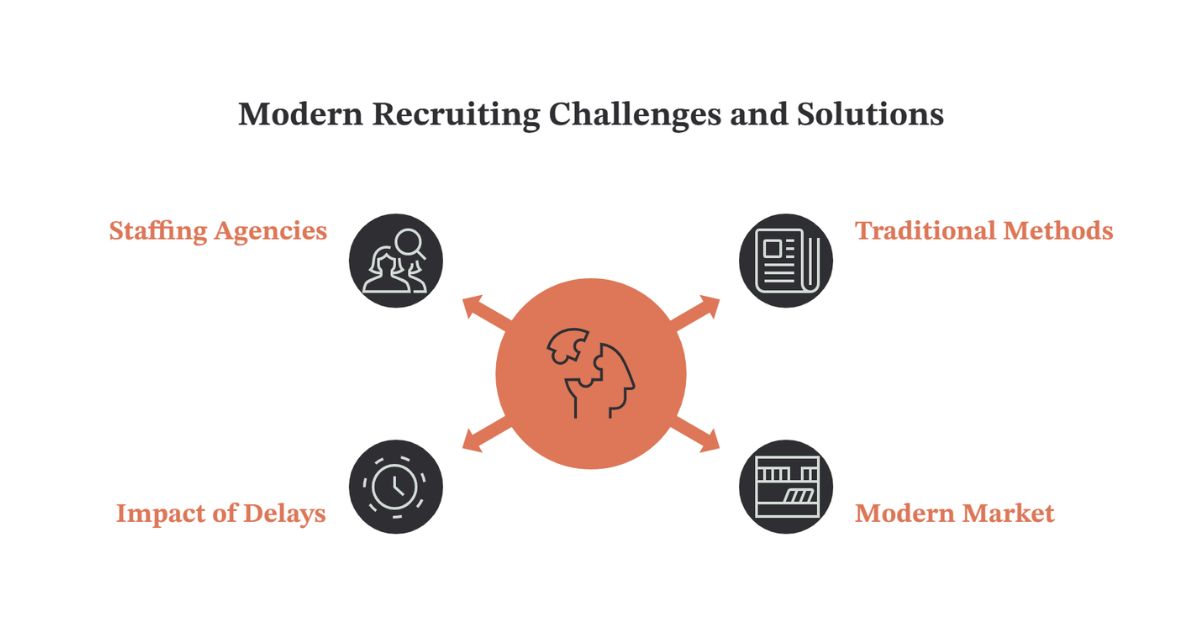
While workforce shortages affect many sectors, some industries face particularly severe challenges.
Let’s examine the sectors experiencing the greatest pressure.
Manufacturing Industry
Manufacturing remains one of the hardest-hit industries.
Modern manufacturing requires workers who understand:
- Automated machinery
- CNC equipment
- Robotics systems
- Quality control processes
- Production technologies
Unfortunately, many experienced workers are retiring while fewer younger workers enter the field.
As a result, manufacturers often struggle to maintain production targets.
Common Manufacturing Roles in Short Supply
- CNC machinists
- Welders
- Maintenance technicians
- Production supervisors
- Industrial electricians2026
- Quality assurance specialists
Warehousing and Logistics
The growth of e-commerce has dramatically increased demand for logistics professionals.
Organizations need skilled workers capable of managing:
- Inventory systems
- Warehouse technology
- Transportation coordination
- Distribution operations
As supply chains become more complex, workforce shortages continue to impact efficiency.
Common Logistics Positions in Demand
- Warehouse supervisors
- Logistics coordinators
- Forklift specialists
- Inventory managers
- Distribution planners
Construction and Skilled Trades
Construction companies continue to face significant recruiting challenges.
Projects often require specialized expertise that cannot be quickly replaced.
Demand remains high for:
- Electricians
- Plumbers
- Carpenters
- HVAC technicians
- Heavy equipment operators
Without enough skilled tradespeople, project timelines frequently suffer.
Engineering and Technical Roles
Engineering shortages impact industries ranging from manufacturing to healthcare technology.
Organizations increasingly seek professionals with expertise in:
- Mechanical engineering
- Electrical engineering
- Industrial automation
- Software systems
- Process optimization
These roles often remain open for months due to limited candidate availability.
Healthcare Support Roles
Healthcare organizations face ongoing staffing shortages across multiple functions.
Critical positions include:
- Medical assistants
- Therapists
- Laboratory technicians
- Caregivers
- Nursing support staff
Healthcare employers need reliable access to qualified professionals to maintain patient care standards.
For healthcare facilities experiencing workforce shortages, partnering with experienced staffing specialists can significantly reduce hiring delays and improve workforce stability.
Transportation and Supply Chain Operations
Transportation plays a vital role in the global economy.
However, many organizations struggle to recruit:
- Commercial drivers
- Fleet managers
- Supply chain analysts
- Transportation planners
These shortages can create ripple effects across entire industries.
When transportation slows, inventory delays increase, and customer satisfaction declines.
The skilled worker shortage is no longer a future concern.
It is a present-day business challenge affecting organizations of every size.
Signs Your Company Is Being Affected by Skilled Worker Shortages
Many organizations do not realize they have a workforce shortage problem until operational performance begins to decline.
A skilled worker shortage rarely appears overnight. Instead, it develops gradually, creating small problems that eventually become major business challenges.
If your company is experiencing several of the following warning signs, workforce shortages may already be affecting your operations.
Open Positions Remain Unfilled for Months
One of the most obvious indicators is an increase in time-to-fill.
Positions that once took 30 days to fill may now remain open for 60, 90, or even 120 days.
When critical vacancies stay open:
- Workloads increase for existing employees
- Projects slow down
- Customer service suffers
- Production targets become harder to achieve
Long vacancy periods often indicate a shortage of qualified candidates rather than a lack of recruiting effort.
Increased Overtime Costs
When organizations cannot hire enough skilled workers, existing employees often absorb the extra workload.
This typically leads to:
- Increased overtime hours
- Higher payroll expenses
- Greater employee fatigue
- Increased risk of mistakes
While overtime may solve short-term staffing issues, it is rarely a sustainable long-term solution.
Reduced Productivity
Imagine a manufacturing facility running with only 80% of its required workforce.
Machines sit idle.
Production lines slow down.
Supervisors spend more time solving staffing issues than improving operations.
A shortage of qualified workers directly affects productivity and output.
Even highly efficient organizations struggle when critical positions remain vacant.
Higher Employee Burnout
Employee burnout often becomes a hidden consequence of workforce shortages.
Workers who consistently carry additional responsibilities may experience:
- Physical exhaustion
- Mental fatigue
- Reduced job satisfaction
- Increased stress
Over time, burnout can create a vicious cycle.
As employees leave due to stress, staffing shortages worsen.
Increased Turnover Rates
Employees often leave organizations when they feel overwhelmed or unsupported.
Signs of workforce-related turnover include:
- Frequent resignations
- Declining employee engagement
- Lower retention rates
- Difficulty replacing experienced workers
High turnover can significantly increase recruitment costs and operational disruptions.
Missed Business Opportunities
Perhaps the most expensive consequence of workforce shortages is lost growth.
Organizations may be forced to:
- Decline new projects
- Delay expansion plans
- Reduce service capacity
- Turn away customers
When businesses cannot scale due to staffing constraints, competitors often capture those opportunities instead.
The Hidden Costs of Skilled Worker Shortages
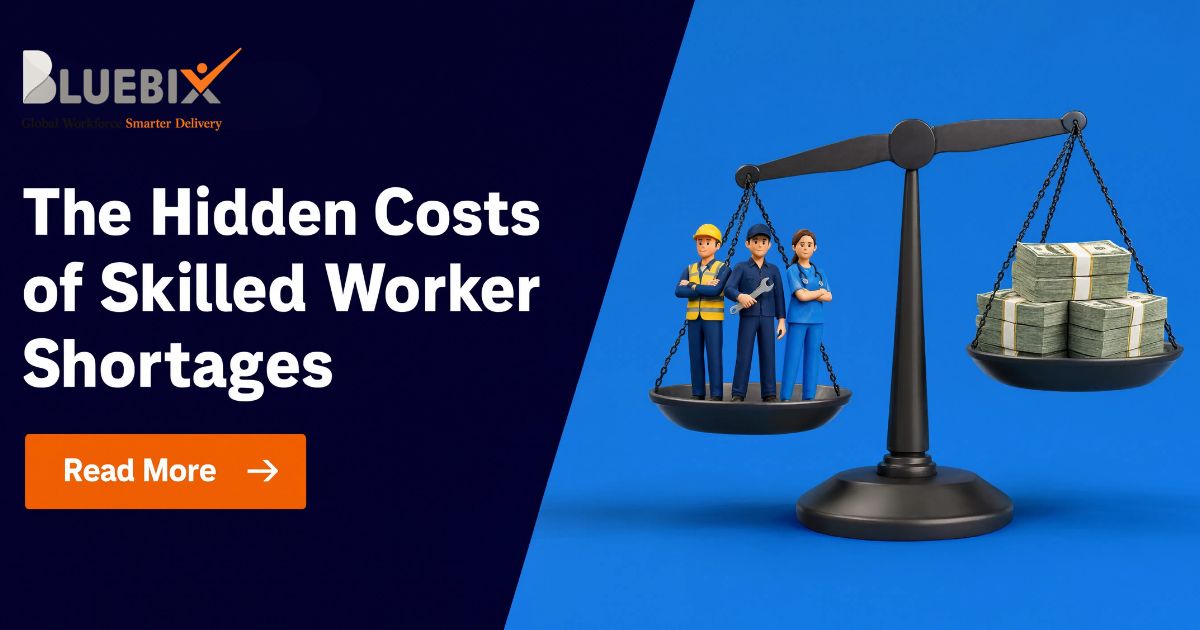
Many employers focus only on the visible cost of vacancies.
However, the true financial impact is often much larger.
A vacant position affects nearly every part of an organization.
Like a missing gear in a machine, a single missing employee can reduce the effectiveness of the entire operation.
Revenue Loss from Delayed Projects
Projects frequently slow down when skilled workers are unavailable.
Examples include:
- Manufacturing orders delayed
- Construction projects extended
- Maintenance schedules postponed
- Product launches pushed back
Every delay can result in lost revenue and reduced profitability.
In competitive markets, delays can also damage client relationships.
Declining Product Quality
When companies operate with insufficient staffing, quality often suffers.
Employees may rush through tasks.
Training may become inconsistent.
Supervisors may have less time to oversee operations.
Potential consequences include:
- Defective products
- Service errors
- Customer complaints
- Increased rework costs
Quality issues can quickly damage a company’s reputation.
Increased Recruitment Costs
Hiring shortages typically lead to increased spending on recruitment activities.
Organizations may invest more in:
- Job advertisements
- Recruiting software
- Candidate sourcing
- Interview processes
- Referral programs
The longer a vacancy remains open, the more expensive recruitment becomes.
Customer Satisfaction Issues
Customers notice when organizations struggle with staffing.
Common outcomes include:
- Longer delivery times
- Reduced service quality
- Communication delays
- Missed deadlines
Customer expectations continue to rise.
Businesses that fail to meet those expectations risk losing market share.
Workplace Safety Concerns
Workforce shortages can increase safety risks.
Employees who work excessive hours are more likely to experience:
- Fatigue
- Reduced concentration
- Accidents
- Injuries
When these fatigue-driven incidents cause serious bodily harm, victims often need an experienced accident attorney to handle the resulting liability and workers’ compensation claims
This is particularly concerning in industries such as:
- Manufacturing
- Construction
- Warehousing
- Transportation
- Healthcare
Safety incidents often create both human and financial consequences.
Competitive Disadvantages
Organizations with workforce shortages often struggle to compete effectively.
Competitors with stronger talent pipelines can:
- Deliver projects faster
- Improve customer service
- Expand more rapidly
- Innovate more efficiently
In today’s economy, talent has become a competitive advantage.
Companies that consistently attract skilled workers often outperform those that cannot.
Quick Cost Summary
A skilled worker shortage can lead to:
- Lost revenue
- Increased labor costs
- Lower productivity
- Customer dissatisfaction
- Reduced quality
- Slower growth
- Higher turnover
- Increased safety risks
These costs frequently exceed the salary of the position being filled.
How Skilled Worker Shortages Impact Manufacturing and Operations
Manufacturing and operations departments are often the most affected by workforce shortages.
These environments depend heavily on efficiency, timing, and specialized expertise.
When skilled workers are unavailable, operational performance can deteriorate quickly.
Production Delays
Production schedules depend on having the right people in the right roles.
When critical positions remain vacant:
- Production lines slow down
- Output decreases
- Delivery schedules suffer
- Customer orders are delayed
Even a single missing technician can disrupt an entire production process.
Supply Chain Bottlenecks
Supply chains operate like interconnected systems.
If one area experiences staffing challenges, delays spread throughout the entire network.
Examples include:
- Shipping delays
- Inventory shortages
- Procurement disruptions
- Warehouse inefficiencies
These bottlenecks can significantly increase operating costs.
Inventory Challenges
Workforce shortages often make inventory management more difficult.
Organizations may experience:
- Overstock situations
- Stockouts
- Inaccurate inventory counts
- Delayed replenishment
Poor inventory control affects both cash flow and customer satisfaction.
Reduced Operational Efficiency
Operations teams thrive on consistency.
When staffing shortages occur, managers often spend valuable time resolving workforce issues rather than improving processes.
Common consequences include:
- Reduced productivity
- Increased downtime
- Lower equipment utilization
- Less process optimization
Efficiency losses often compound over time.
Increased Procurement Risks
Procurement teams depend on predictable operations.
Workforce shortages create uncertainty throughout the supply chain.
This can result in:
- Supplier relationship challenges
- Material shortages
- Higher procurement costs
- Emergency purchasing
What Employers Really Want: How to Find Skilled Workers Faster
Employers across industries share a common goal.
They want qualified workers quickly, reliably, and cost-effectively.
Unfortunately, traditional recruiting methods often struggle to meet these expectations.
Understanding what employers truly need helps organizations build more effective hiring strategies.
Access to Qualified Candidates
The biggest challenge is not attracting applicants.
It is attracting qualified applicants.
Employers need candidates who possess:
- Relevant experience
- Technical skills
- Industry certifications
- Strong work ethic
- Cultural fit
Quality consistently outweighs quantity.
Receiving hundreds of unqualified applications rarely solves hiring problems.
Faster Hiring Timelines
Time is money.
Every day a critical role remains vacant creates operational challenges.
Employers increasingly prioritize:
- Faster candidate sourcing
- Efficient screening processes
- Streamlined interviews
- Accelerated onboarding
Reducing hiring timelines often significantly improves business performance.
Reduced Recruitment Costs
Hiring costs continue to rise.
Employers want solutions that help them:
- Minimize advertising expenses
- Reduce turnover costs
- Improve hiring efficiency
- Increase recruitment ROI
Strategic hiring often costs less than repeated hiring.
Workforce Flexibility
Business needs frequently change.
Seasonal demand, new contracts, and unexpected growth can create workforce fluctuations.
Organizations increasingly value staffing solutions that provide:
- Temporary workers
- Contract professionals
- Project-based staffing
- Flexible workforce scaling
Flexibility helps businesses remain competitive.
Reliable Long-Term Staffing Solutions
Most employers are not looking for quick fixes.
They want sustainable workforce strategies.
Successful organizations focus on:
- Building talent pipelines
- Improving retention
- Developing future leaders
- Strengthening employer branding
Long-term workforce planning often delivers the greatest return on investment.
Strategic Hiring Checklist
To hire skilled workers faster, employers should focus on:
Strong sourcing strategies
Competitive compensation
Positive candidate experiences
Faster hiring processes
Workforce flexibility
Reliable staffing partnerships
Proven Strategies to Overcome Skilled Worker Shortages
There is no single solution to workforce shortages.
However, organizations that combine multiple strategies often achieve the best results.
The following approaches have helped employers successfully attract, hire, and retain skilled workers.
Build a Strong Employer Brand
Candidates evaluate employers just as employers evaluate candidates.
A strong employer brand communicates:
- Company culture
- Career opportunities
- Employee value
- Organizational stability
Organizations with positive reputations often attract better candidates.
Ways to Improve Employer Branding
- Showcase employee success stories
- Highlight company values
- Promote workplace culture
- Share career growth opportunities
- Consistent visual branding, including materials created with an AI logo maker, can also help employers present a more recognizable and professional
Offer Competitive Compensation Packages
Compensation remains one of the most influential factors in hiring.
Employers should regularly evaluate:
- Base salaries
- Bonus structures
- Benefits packages
- Retirement plans
- Healthcare offerings
Competitive compensation helps attract and retain top talent.
Invest in Employee Training Programs
Sometimes the best candidate is not available today.
Organizations can build talent internally through training and development.
Effective programs include:
- Apprenticeships
- Technical certifications
- Leadership training
- Cross-training initiatives
- Mentorship programs
Training creates long-term workforce sustainability.
Create Career Growth Opportunities
Growth opportunities may include:
- Promotions
- Skills development
- Leadership pathways
- Professional certifications
Career development strengthens retention and engagement.
Improve Candidate Experience
A complicated hiring process can drive candidates away.
Employers should focus on:
- Faster communication
- Simplified applications
- Clear expectations
- Timely interview feedback
A positive candidate experience improves acceptance rates.
Expand Talent Sourcing Channels
Relying on one recruitment source limits hiring success.
Employers should diversify sourcing efforts through:
- Job boards
- Employee referrals
- Industry associations
- Social media recruiting
- Workforce development programs
Broader sourcing increases access to qualified talent.
Utilize Temporary and Contract Staffing
Temporary staffing can provide immediate workforce support.
Benefits include:
- Faster placements
- Workforce flexibility
- Reduced hiring risk
- Scalability
Many organizations use temporary staffing as a bridge while searching for permanent employees.
Partner with Staffing Experts
One of the fastest ways to overcome workforce shortages is partnering with experienced staffing professionals.
Staffing experts often provide:
- Pre-screened candidates
- Industry-specific recruiting expertise
- Faster hiring timelines
- Workforce flexibility
For employers facing persistent staffing challenges, a trusted staffing partner can become a powerful competitive advantage.
As workforce shortages continue to evolve, organizations that act proactively will be better positioned to maintain productivity, improve retention, and support long-term growth.
How Staffing Agencies Help Solve Skilled Worker Shortages
As workforce shortages continue to impact industries across the country, many employers are realizing that traditional recruiting methods alone are no longer enough.
Posting jobs and waiting for applications worked well years ago. Today’s labor market is different.
Qualified candidates are in high demand, competition is fierce, and hiring delays can quickly affect productivity, customer satisfaction, and revenue.
This is where staffing agencies provide significant value.
A professional staffing partner helps employers access talent faster while reducing hiring risks and administrative burdens.
Access to Pre-Screened Skilled Talent
One of the biggest advantages of working with a staffing agency is immediate access to qualified candidates.
Rather than starting every search from scratch, staffing agencies continuously build and maintain talent networks.
Candidates are often screened for:
- Experience
- Certifications
- Technical skills
- Employment history
- Professional references
- Industry knowledge
This allows employers to spend less time reviewing resumes and more time interviewing qualified candidates.
Why Pre-Screening Matters
Without proper screening:
- Hiring mistakes increase
- Recruitment costs rise
- Productivity suffers
- Turnover becomes more common
Pre-screening helps reduce these risks significantly.
Faster Hiring Processes
Speed has become a competitive advantage in recruiting.
Top candidates often receive multiple job offers.
Employers that move slowly frequently lose the best talent.
Staffing agencies accelerate hiring through:
- Existing candidate pipelines
- Specialized recruiters
- Industry expertise
- Streamlined vetting processes
Instead of spending weeks sourcing candidates, employers can often review qualified applicants within days.
Workforce Scalability
Business needs change constantly.
A manufacturing company may win a large contract.
A healthcare facility may experience seasonal demand.
A warehouse may need additional staff during peak periods.
Staffing agencies help organizations scale their workforce quickly without committing to permanent hires before they are needed.
Flexible staffing options include:
- Temporary staffing
- Contract staffing
- Temp-to-hire placements
- Direct hire recruitment
- Project-based staffing
This flexibility allows businesses to respond quickly to changing market conditions.
Reduced Administrative Burden
Hiring involves more than simply selecting candidates.
Recruitment requires:
- Job advertising
- Candidate sourcing
- Resume screening
- Interview coordination
- Reference checks
- Compliance verification
- Onboarding support
These activities consume valuable internal resources.
A staffing agency handles much of this workload, allowing HR teams and managers to focus on core business priorities.
Industry-Specific Recruiting Expertise
Different industries require different hiring approaches.
Recruiting a CNC machinist is not the same as recruiting a logistics coordinator.
Healthcare recruiting differs from manufacturing recruiting.
Experienced staffing firms understand:
- Industry terminology
- Required certifications
- Technical competencies
- Market salary expectations
- Candidate availability trends
This expertise improves hiring accuracy and efficiency.
Risk Reduction and Compliance Support
Hiring mistakes can be expensive.
Staffing agencies help reduce risk through:
- Background screening
- Credential verification
- Employment eligibility checks
- Skills assessments
- Compliance support
For healthcare organizations, compliance is especially critical.
Verifying certifications, licenses, and qualifications helps maintain workforce quality and regulatory standards.
Key Benefits of Staffing Agencies
Employers often partner with staffing firms to achieve:
Faster hiring
Better candidate quality
Workforce flexibility
Reduced recruitment costs
Lower hiring risks
Increased productivity
In today’s labor market, staffing agencies have become strategic workforce partners rather than simple recruiting vendors.
How BluebixInc Helps Employers Fill Skilled Positions Faster
At Bluebix Inc, we understand that workforce shortages create real business challenges.
When positions remain vacant, productivity slows, employees become overwhelmed, and growth opportunities are missed.
Our mission is simple:
Help employers connect with qualified, skilled workers quickly, efficiently, and confidently.
Our Workforce Recruitment Process
Successful hiring begins with understanding the employer’s needs.
Rather than using a one-size-fits-all approach, Bluebix Inc develops customized recruiting strategies based on:
- Workforce requirements
- Industry demands
- Position complexity
- Hiring timelines
- Company culture
Our recruitment process focuses on both speed and quality.
Bluebix Recruitment Workflow
- Workforce Consultation
- Position Analysis
- Candidate Sourcing
- Screening and Evaluation
- Client Interviews
- Placement Support
- Ongoing Follow-Up
This structured process helps improve hiring outcomes and reduce delays.
Industries We Serve
Bluebix Inc supports employers across a variety of sectors experiencing workforce shortages.
Key industries include:
- Manufacturing
- Warehousing
- Logistics
- Supply Chain Operations
- Skilled Trades
- Engineering
- Administrative Support
- Light Industrial Staffing
By focusing on workforce-intensive industries, we develop deep knowledge of hiring trends and candidate requirements.
Candidate Screening and Qualification
Finding applicants is easy.
Finding qualified applicants is where expertise matters.
Every candidate undergoes a thorough evaluation process that may include:
- Skills assessments
- Experience verification
- Background screening
- Reference checks
- Credential validation
- Interview evaluations
Our goal is to present candidates who are prepared to contribute from day one.
Flexible Staffing Models
Different businesses have different workforce needs.
Bluebix Inc offers flexible staffing solutions designed to support:
Temporary Staffing
Ideal for:
- Seasonal demand
- Special projects
- Workforce fluctuations
- Short-term coverage
Contract Staffing
Useful when employers need specialized expertise for a defined period.
Temp-to-Hire Staffing
Allows employers to evaluate candidates before making permanent hiring decisions.
Direct Hire Recruitment
Designed for organizations seeking long-term workforce stability.
This flexibility enables employers to build workforce strategies that align with operational goals.
Direct Hire and Temporary Staffing Solutions
Many workforce shortages require immediate action.
Waiting months to fill critical positions is not always an option.
Bluebix Inc helps employers:
- Reduce vacancy periods
- Improve workforce continuity
- Increase productivity
- Strengthen operational performance
Whether a company needs one skilled worker or an entire workforce team, our recruitment specialists work to deliver results quickly.
Why Employers Choose BluebixInc
Employers partner with Bluebix Inc because they need more than resumes.
They need workforce solutions.
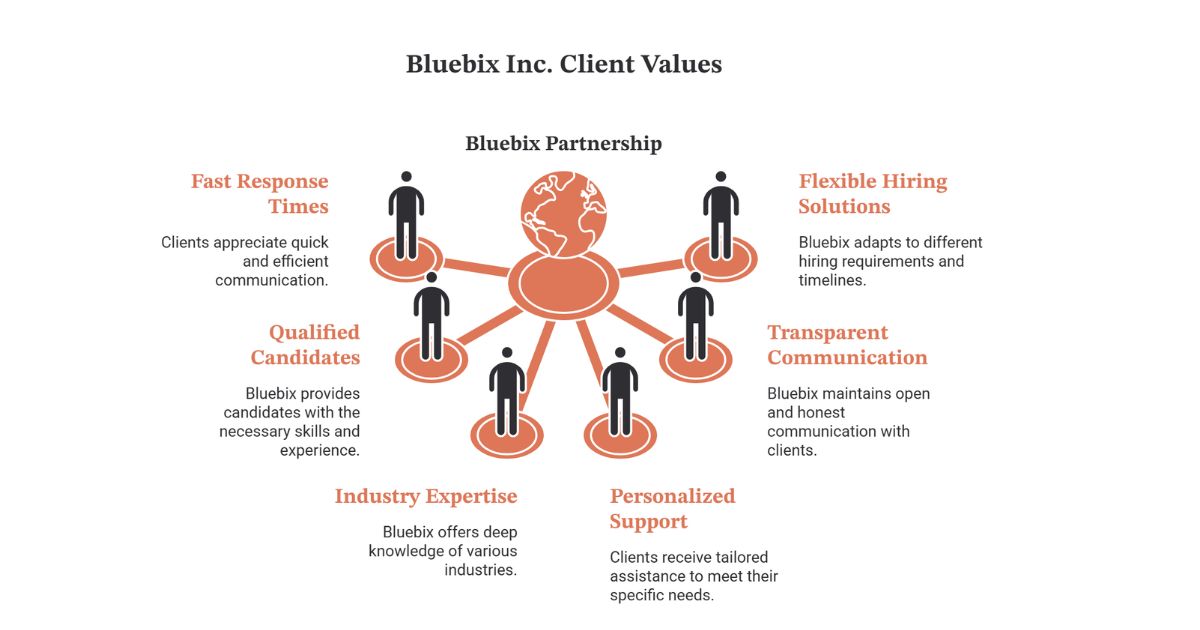
Clients value:
- Fast response times
- Qualified candidates
- Industry expertise
- Personalized support
- Transparent communication
- Flexible hiring solutions
When workforce shortages threaten business performance, having the right staffing partner can make all the difference.
Looking for Skilled Workers Faster?
If your organization is struggling with hiring delays, workforce shortages, or talent gaps, Bluebix Inc can help.
Future Outlook: Will the Skilled Worker Shortage Continue?
Many employers ask the same question:
Will the skilled worker shortage improve soon?
While labor market conditions will continue to evolve, most workforce experts believe talent shortages will remain a significant challenge throughout the coming years.
Organizations that prepare today will be better positioned for future success.
Emerging Workforce Trends
Several trends are reshaping workforce dynamics:
- Aging populations
- Increased automation
- Remote work expansion
- Skills-based hiring
- Workforce mobility
- Digital transformation
These trends are changing how organizations recruit, train, and retain employees.
Impact of Automation and AI
Automation and artificial intelligence are transforming industries.
Instead, it is changing skill requirements.
Organizations increasingly need employees capable of:
- Operating automated systems
- Maintaining advanced equipment
- Analyzing workforce data
- Managing technology-driven processes
The future workforce will require both technical expertise and adaptability.
Future Talent Demand Forecasts
Demand is expected to remain strong in industries such as:
- Manufacturing
- Logistics
- Healthcare
- Skilled trades
- Engineering
- Supply chain operations
Many of these sectors already face talent shortages today.
Future demand may increase as economic growth and technological advancement continue.
How Employers Can Prepare
The organizations most likely to succeed will adopt proactive workforce planning strategies.
Recommended actions include:
Build Talent Pipelines
Develop ongoing relationships with potential candidates before positions become available.
Invest in Training
Upskill existing employees to address future workforce needs.
Improve Retention
Keeping skilled employees is often more cost-effective than replacing them.
Partner with Workforce Experts
Strategic staffing partnerships can help organizations respond faster to labor market changes.
Companies that treat workforce planning as a long-term business strategy will gain a significant competitive advantage.
Conclusion
The skilled worker shortage is one of the most significant workforce challenges facing employers in 2026.
Across manufacturing, logistics, healthcare, engineering, construction, and skilled trades, organizations are struggling to find qualified talent to meet operational demands.
The causes are complex.
An aging workforce, widening skills gaps, evolving technology, changing demographics, and increased competition for talent have all contributed to today’s labor shortage.
However, employers are not powerless.
Organizations that invest in workforce planning, employee development, competitive compensation, and strategic recruiting partnerships can successfully overcome many of these challenges.
Key Takeaways
- Skilled worker shortages affect productivity, profitability, and growth.
- Workforce shortages often create hidden costs beyond vacant positions.
- Proactive workforce planning improves long-term hiring success.
- Training, retention, and employer branding are critical strategies.
- Staffing agencies provide faster access to qualified candidates.
- Flexible workforce solutions help organizations remain competitive.
Action Steps Employers Should Take Today
- Evaluate current workforce gaps.
- Review hiring processes.
- Strengthen retention initiatives.
- Expand sourcing channels.
- Build workforce development programs.
- Consider strategic staffing partnerships.
Long-Term Workforce Planning Recommendations
Businesses that start planning today will be better prepared tomorrow.
A strong workforce strategy is no longer optional—it is essential for sustainable growth.
If your organization is experiencing hiring challenges, Bluebix Inc can help you connect with qualified, skilled professionals faster, reduce workforce gaps, and build a stronger team for the future.
Frequently Asked Questions (FAQs)
Why are skilled worker shortages worsening even when unemployment exists?
A skilled worker shortage occurs when available workers lack the specific qualifications employers need. While unemployment may exist, many open positions require specialized technical skills, certifications, or industry experience that are currently in short supply, creating a mismatch between job seekers and employer requirements.
Which positions are hardest to fill during a skilled worker shortage?
Manufacturing technicians, CNC operators, welders, maintenance mechanics, engineers, logistics coordinators, machine operators, and specialized healthcare support roles are among the most difficult positions to fill because they require technical expertise and hands-on experience.
How long does a skilled worker shortage typically impact a business?
The impact can last months or even years if companies do not implement proactive workforce planning strategies. Businesses that invest in training, retention, and strategic recruiting partnerships generally recover faster than those relying solely on traditional hiring methods.
Can automation completely solve skilled labor shortages?
No. Automation can improve efficiency and reduce repetitive tasks, but businesses still need skilled professionals to operate, maintain, program, supervise, and optimize automated systems. Human expertise remains critical for long-term operational success.
What is the biggest mistake employers make during a talent shortage?
Many employers focus only on filling immediate vacancies rather than building a long-term talent pipeline. This reactive approach often leads to recurring staffing problems, increased hiring costs, and ongoing workforce instability.
How does employee turnover contribute to skilled worker shortages?
High turnover reduces organizational knowledge, increases recruitment expenses, and creates continuous staffing gaps. Replacing experienced workers often takes significant time and resources, especially in industries requiring specialized skills.
Are skilled worker shortages affecting small businesses more than large companies?
In many cases, yes. Larger organizations often have stronger employer brands, larger recruiting budgets, and broader talent networks. Small businesses may face greater challenges competing for skilled professionals without strategic recruitment support.
What role does workforce planning play in preventing labor shortages?
Workforce planning helps organizations forecast future hiring needs, identify potential skill gaps, and develop recruitment strategies before shortages become critical. It transforms hiring from a reactive process into a proactive business function.
How can staffing agencies identify qualified candidates faster than employers?
Staffing agencies maintain extensive candidate databases, industry networks, and specialized recruiting teams. They continuously source and screen talent, allowing them to provide qualified candidates more quickly than most internal hiring teams.
When should a company consider partnering with a staffing agency?
Companies should consider staffing support when vacancies remain open for extended periods, productivity is affected, turnover increases, seasonal demand rises, or internal recruiting resources are unable to keep up with workforce requirements.
About the Author
BluebixInc Editorial Team
Staffing insights and workforce solutions for employers.