How to Choose a Staffing Agency: 12 Expert Tips

Finding the right recruitment partner can make the difference between building a productive workforce and struggling with costly hiring mistakes.
If you’re wondering how to choose a staffing agency, you’re not alone. Business owners, HR managers, and workforce planners often face challenges such as talent shortages, long hiring cycles, and rising recruitment costs.
Choosing the wrong agency can lead to poor candidate quality, compliance issues, and unnecessary turnover. On the other hand, the right staffing partner can help you hire faster, reduce risk, and improve retention.
This guide shares 12 expert tips to help you confidently select a staffing agency that aligns with your hiring goals and long-term business growth.
What Is a Staffing Agency?
A staffing agency is a recruitment partner that helps businesses find, screen, and hire qualified employees for temporary, contract, temp-to-hire, or permanent positions.
Instead of spending weeks sourcing candidates, reviewing resumes, and conducting interviews, employers can rely on a staffing agency’s expertise and talent network to fill open roles more efficiently.
Think of a staffing agency as a bridge connecting businesses with job seekers.
According to guidance from employment and workforce organizations, a structured recruitment process improves hiring quality, reduces vacancy periods, and helps businesses stay compliant with employment regulations.
This is especially valuable in competitive labor markets where qualified candidates are in high demand.
A staffing agency recruits employees for employers by identifying qualified candidates, evaluating their skills, and matching them with suitable job opportunities.
Depending on the hiring model, the agency may act as the employer for temporary workers or facilitate direct hiring for permanent positions.
How Staffing Agencies Work
Although each agency has its own process, most follow a structured recruitment workflow:
- Understand the employer’s hiring needs and job requirements.
- Source candidates through job boards, referrals, databases, and professional networks.
- Screen resumes and conduct interviews.
- Verify skills, work history, and references.
- Perform background checks when required.
- Present the most qualified candidates to the employer.
- Coordinate interviews and offer negotiations.
- Support onboarding and follow-up after placement.
This streamlined process allows businesses to access qualified talent much faster than they can by handling every recruitment step internally.
Types of Staffing Agencies
Choosing the right staffing agency also means understanding the different staffing models available.
Temporary Staffing
Temporary staffing provides employees for short-term assignments, seasonal demand, special projects, or employee absences. This option gives businesses flexibility without making long-term hiring commitments.
Temp-to-Hire
A temp-to-hire arrangement allows employers to evaluate an employee’s performance on the job before deciding whether to offer a permanent position. This reduces hiring risk and improves long-term fit.
Direct Hire
With direct hire recruiting, the staffing agency identifies, screens, and recommends candidates for permanent employment. Once hired, the employee is added to the company’s payroll immediately.
Contract Staffing
Contract staffing is commonly used for specialized projects that require technical expertise or experienced professionals, for a fixed period. Industries such as IT, engineering, and healthcare frequently use this hiring model.
Executive Search
Executive search firms specialize in recruiting senior leaders, including directors, vice presidents, and C-suite executives. These searches typically involve confidential recruiting, extensive market research, and targeted candidate outreach.
Managed Workforce Solutions
Some staffing agencies provide end-to-end workforce management services, including recruitment, onboarding, payroll administration, compliance support, vendor coordination, and workforce planning. This approach is ideal for organizations managing large or complex staffing needs.
When Should a Business Use a Staffing Agency?
Not every company needs a staffing agency all the time. However, there are situations where partnering with an experienced recruiter can save significant time, reduce hiring costs, and improve business performance.
If hiring is becoming a bottleneck, it’s often a sign that outside recruitment support can add value.
Signs Your Business Needs Outside Hiring Support
Hiring Is Taking Too Long
Open positions that remain vacant for weeks—or even months—can reduce productivity, increase overtime costs, and place extra pressure on existing employees. A staffing agency already has access to active and passive candidates, helping businesses shorten the hiring cycle.
Positions Remain Open
If the same roles stay open despite multiple job postings, the issue may not be the labor market alone.
High Employee Turnover
Frequent hiring often points to poor candidate-job fit. Staffing agencies use structured screening, behavioral interviews, and skills assessments to improve placement quality and reduce turnover.
Seasonal Hiring Demands
Businesses in manufacturing, retail, logistics, hospitality, agriculture, and healthcare often experience predictable hiring peaks. Staffing agencies can quickly scale the workforce up or down without requiring permanent headcount increases.
Business Expansion
Opening a new location, launching a production line, or entering a new market often requires hiring dozens, or even hundreds, of employees within a short timeframe. Staffing agencies provide the recruitment capacity needed to support rapid growth.
Industries That Benefit Most
While almost every industry can benefit from staffing services, recruitment agencies are particularly valuable in sectors facing ongoing labor shortages or fluctuating workforce demands.
These industries commonly rely on staffing agencies:
- Manufacturing
- Healthcare
- Warehousing and Distribution
- Logistics and Transportation
- Administrative and Office Support
- Skilled Trades
- Engineering
- Information Technology (IT)
In these sectors, agencies often maintain specialized talent pipelines, understand industry certifications, and stay informed about evolving workforce trends. This expertise helps employers find qualified candidates more efficiently than general hiring methods.
Why Choosing the Right Staffing Agency Matters
Not all staffing agencies deliver the same results. Some specialize in specific industries, while others focus on high-volume hiring or executive recruitment.
Choosing the right partner affects far more than how quickly you fill an open position—it influences employee quality, productivity, compliance, and long-term business growth.
A strong staffing partnership becomes an extension of your hiring team, helping you make better recruitment decisions while reducing administrative workload.
Better Candidate Quality
Experienced staffing agencies invest significant time in sourcing, screening, interviewing, and evaluating candidates before presenting them to employers. This means hiring managers spend less time reviewing unqualified applicants and more time interviewing people who genuinely fit the role.
Higher-quality candidates often lead to:
- Better job performance
- Improved cultural fit
- Higher employee retention
- Increased productivity
Faster Hiring
An established staffing agency maintains active talent pools and recruitment networks. Instead of starting every search from scratch, recruiters can quickly connect employers with pre-qualified candidates, reducing time-to-fill and minimizing costly vacancies.
Lower Recruitment Costs
Although staffing agencies charge service fees, they can help lower the overall cost of hiring by reducing advertising expenses, recruiter workload, overtime caused by understaffing, and the financial impact of bad hires.
Reduced Hiring Risk
Many agencies offer replacement guarantees, structured screening processes, and compliance support, giving employers greater confidence in their hiring decisions. This added layer of protection can reduce the risk of turnover and hiring errors.
Stronger Workforce Retention
Effective staffing isn’t just about filling jobs—it’s about placing candidates who are likely to succeed and stay. Agencies that understand your company culture, leadership style, and job expectations are better positioned to identify long-term matches.
Compliance Support
Employment laws continue to evolve, making compliance challenging. Reputable staffing agencies help employers navigate areas such as worker classification, payroll administration, background screening, and workplace safety requirements. This support reduces legal risks and allows internal teams to focus on core business operations.
Staffing Agency Evaluation Checklist: 12 Expert Tips
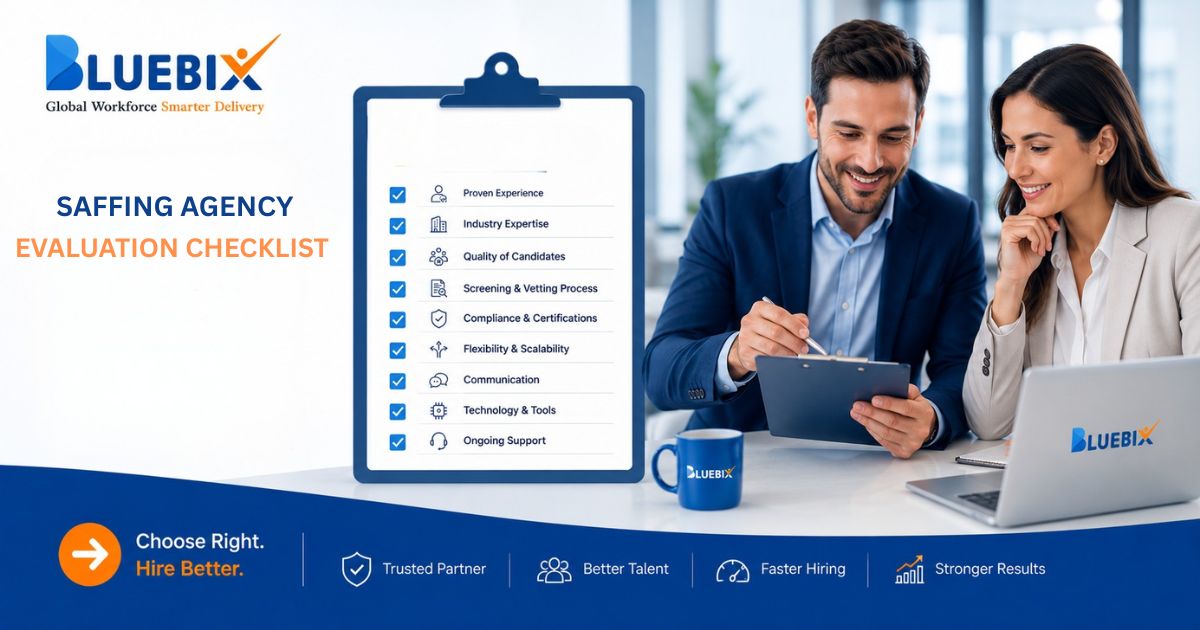
Choosing a staffing agency isn’t just about finding someone to fill open positions. You’re selecting a long-term hiring partner who will represent your brand, communicate with candidates, and influence the quality of your workforce.
Use the following evaluation checklist before signing a staffing agreement. These expert tips are based on industry best practices and common factors businesses use to evaluate recruitment partners.
1. Understand Your Hiring Needs First
Before comparing staffing agencies, take time to understand your own hiring requirements. Without a clear hiring plan, even the best recruiters will struggle to find the right candidates.
Think of it like building a house. You wouldn’t hire a contractor before creating the blueprint. Recruitment works the same way—the clearer your hiring goals, the better the outcome.
Volume Hiring
Start by estimating how many employees you need.
Ask yourself:
- Are you hiring one specialist or an entire team?
- Is this a one-time hiring project?
- Will hiring continue throughout the year?
- Are multiple departments recruiting simultaneously?
High-volume recruitment often requires agencies with larger recruiter teams, automation tools, and established talent pipelines.
Temporary vs. Permanent Hiring
Determine the employment type before contacting agencies.
Different staffing firms specialize in different hiring models:
- Temporary staffing
- Temp-to-hire
- Direct hire
- Contract staffing
- Executive recruitment
Choosing an agency that regularly handles your preferred hiring model often leads to better results.
Required Skills
Clearly define the qualifications your ideal candidate should possess.
Consider:
- Technical skills
- Industry certifications
- Years of experience
- Software knowledge
- Communication abilities
- Leadership experience
The more detailed your requirements are, the easier it is for recruiters to identify qualified candidates.
Budget
Hiring costs extend beyond agency fees.
Plan your recruitment budget by considering:
- Placement fees
- Advertising costs
- Candidate relocation
- Overtime caused by vacant positions
- Onboarding expenses
- Training costs
A realistic budget helps staffing agencies recommend the most effective recruitment strategy without unexpected surprises.
2. Look for Industry Experience
Not every staffing agency understands every industry.
A recruiter who successfully hires software engineers may struggle to recruit CNC machinists, travel nurses, or warehouse supervisors. Industry knowledge matters because hiring requirements, certifications, compliance standards, and candidate expectations vary widely.
An experienced recruiter already understands the challenges unique to your industry, reducing the learning curve and improving hiring quality.
Industry-Specific Recruiters
Ask whether recruiters specialize in your sector.
For example:
- Manufacturing
- Healthcare
- Engineering
- Skilled Trades
- Information Technology
- Logistics
- Administrative Staffing
Specialized recruiters understand job titles, technical terminology, salary expectations, and industry certifications.
This knowledge helps them identify stronger candidates much faster.
Local Market Knowledge
Labor markets differ from one city or region to another.
An agency familiar with your local hiring market understands:
- Average wages
- Candidate availability
- Competitor hiring activity
- Regional labor shortages
- Local employment regulations
This insight allows recruiters to adjust hiring strategies based on current market conditions rather than relying on generic national trends.
Niche Talent Network
Top staffing agencies don’t rely only on job boards.
Instead, they build long-term relationships with professionals in specialized industries.
Strong agencies maintain:
- Candidate databases
- Referral programs
- Passive candidate networks
- Alumni connections
- Industry associations
- Professional communities
These networks provide access to qualified candidates who may never apply through traditional job postings.
Expert Tip: Ask what percentage of placements come from the agency’s existing talent network versus public job advertisements. Agencies with strong talent communities often fill roles faster and with higher-quality candidates.
3. Evaluate Candidate Quality
Hiring quickly means little if candidates fail within the first few months.
The best staffing agencies prioritize quality over quantity by following structured screening processes before presenting candidates to employers.
Rather than sending dozens of resumes, they focus on recommending a smaller group of highly qualified applicants.
Screening Process
Ask recruiters how candidates are evaluated before submission.
A thorough screening process typically includes:
- Resume review
- Phone screening
- Employment verification
- Skills matching
- Career goal discussions
This initial evaluation removes unqualified applicants early.
Interviews
Experienced recruiters conduct structured interviews rather than informal conversations.
They evaluate:
- Communication skills
- Professionalism
- Motivation
- Problem-solving ability
- Career stability
- Cultural fit
Structured interviews provide more consistent hiring decisions than unplanned interviews.
Skills Assessments
Depending on the role, agencies may use practical assessments to validate candidate abilities.
Examples include:
- Technical tests
- Typing assessments
- Software proficiency
- Mechanical aptitude
- Coding evaluations
- Excel assessments
Testing helps employers verify actual ability rather than relying solely on resumes.
Background Checks
For many industries, background screening protects both employers and customers.
Depending on the role, agencies may verify:
- Criminal history
- Employment history
- Education
- Professional licenses
- Drug screening
- Driving records
The screening process should comply with applicable employment laws and be appropriate for the position being filled.
Reference Verification
Speaking with previous supervisors often reveals information that resumes cannot.
References can confirm:
- Reliability
- Attendance
- Teamwork
- Leadership
- Technical competence
- Overall performance
Expert Tip: Ask agencies whether they personally verify references or rely only on candidate-provided documentation.
4. Review Their Recruitment Process
A transparent recruitment process demonstrates professionalism and builds trust.
Strong staffing agencies should clearly explain every stage of their hiring workflow—from sourcing candidates to onboarding successful hires.
If an agency struggles to explain its recruitment process, it may indicate inconsistent hiring practices.
Candidate Sourcing
Quality candidates come from multiple channels, not just online job boards.
Leading staffing agencies source talent through:
- Internal candidate databases
- Employee referrals
- LinkedIn outreach
- Industry networking
- Career fairs
- Professional associations
- University partnerships
Using diverse sourcing methods increases access to qualified applicants.
Talent Pipeline
An active talent pipeline allows agencies to respond quickly when hiring needs arise.
Instead of beginning each search from scratch, recruiters maintain ongoing relationships with professionals interested in future opportunities.
This proactive approach often shortens hiring timelines.
Interview Workflow
Ask agencies how interviews are managed.
Look for a structured process covering:
- Candidate scheduling
- Interview preparation
- Employer feedback
- Candidate communication
- Offer coordination
Clear communication throughout the interview process creates a better experience for both employers and candidates.
Offer Management
Recruitment doesn’t end when a candidate accepts an offer.
Strong staffing agencies continue supporting employers by:
- Negotiating offers
- Confirming start dates
- Coordinating paperwork
- Assisting with onboarding
- Maintaining communication before the first day
This reduces the likelihood that candidates will accept another opportunity before joining your company.
5. Ask About Time-to-Fill Performance
One of the most important recruitment metrics is time-to-fill—the average number of days required to fill an open position.
A lengthy hiring process can increase overtime costs, delay projects, reduce productivity, and create additional pressure on existing employees.
While no agency can guarantee exact hiring timelines, experienced recruiters should be able to provide realistic expectations based on previous placements.
Average Hiring Timeline
Ask questions such as:
- What’s your average time-to-fill?
- How does it vary by position?
- What factors typically slow hiring?
Reliable agencies track recruitment metrics and continuously improve their performance.
Emergency Hiring Capability
Unexpected vacancies happen.
Whether replacing an employee who resigned unexpectedly or responding to increased production demand, your staffing partner should be able to support urgent hiring needs.
Ask whether they maintain pre-qualified candidates who are immediately available.
Success Metrics
High-performing staffing agencies monitor key performance indicators (KPIs), including:
- Time-to-fill
- Time-to-submit
- Interview-to-hire ratio
- Offer acceptance rate
- Placement retention
- Client satisfaction
These metrics demonstrate accountability and continuous improvement.
Expert Tip: Don’t focus only on speed. A slightly longer hiring process that results in higher employee retention often delivers greater long-term value than filling positions as quickly as possible.
6. Verify Compliance and Risk Management
Recruitment involves more than finding qualified candidates. Employers must also comply with labor laws, workplace regulations, payroll requirements, and employee documentation.
An experienced staffing agency helps reduce legal and operational risks throughout the hiring process.
Employment Laws
Recruiters should understand applicable employment regulations, including:
- Equal employment practices
- Wage and hour requirements
- Worker classification
- Hiring documentation
- Anti-discrimination standards
Compliance protects both employers and job applicants.
Payroll Administration
For temporary staffing arrangements, many agencies manage payroll responsibilities, including:
- Wage payments
- Tax withholding
- Benefits administration
- Time tracking
- Payroll reporting
This reduces administrative work for employers.
Workers’ Compensation
Ask how workplace injuries are handled.
Reputable staffing agencies explain:
- Insurance coverage
- Claims procedures
- Incident reporting
- Safety responsibilities
Understanding these processes helps prevent confusion in the event of workplace accidents.
OSHA Compliance
For manufacturing, warehousing, construction, and industrial staffing, workplace safety should be a top priority.
Strong staffing agencies often support employers by:
- Verifying safety training
- Confirming required certifications
- Educating workers on job-site expectations
- Promoting safe work practices
A safety-focused recruitment approach benefits both employees and employers.
Credential Verification
Certain industries require professional licenses or certifications.
Examples include:
- Registered Nurses (RN)
- Commercial Driver’s License (CDL)
- Certified Welders
- Licensed Electricians
- Engineers
- Skilled Healthcare Professionals
Before presenting candidates, reputable staffing agencies verify that required credentials are current and valid.
Expert Tip: Ask potential staffing partners to explain their compliance process in detail. Agencies with documented procedures for credential verification, payroll, and workplace safety are generally better equipped to reduce hiring risks and support long-term workforce success.
7. Assess Communication and Responsiveness
Communication is one of the biggest factors that separates exceptional staffing agencies from average ones. Even the most qualified candidates can be lost if communication is slow, unclear, or inconsistent.
A reliable staffing agency should feel like an extension of your HR or recruitment team. You should always know where each position stands, what challenges recruiters are facing, and what the next steps are.
Dedicated Account Manager
Many reputable staffing agencies assign a dedicated account manager to each client.
This provides several benefits:
- A single point of contact
- Better understanding of your business
- Faster issue resolution
- Consistent communication
- Long-term relationship building
Instead of explaining your hiring needs to a different recruiter every time, your account manager becomes familiar with your company culture, workforce goals, and preferred hiring process.
Reporting
Data-driven reporting helps employers make informed hiring decisions.
Ask whether the agency provides reports covering:
- Number of candidates sourced
- Candidates interviewed
- Time-to-fill
- Open positions
- Offer acceptance rates
- Placement success
- Candidate pipeline status
Regular reporting increases transparency and allows you to measure recruitment performance over time.
Response Time
Delays in communication often lead to delays in hiring.
Ask potential staffing partners:
- How quickly do you respond to emails?
- Do you provide same-day updates?
- What happens during urgent hiring situations?
- Who can we contact after business hours if needed?
Hiring Updates
You shouldn’t have to chase recruiters for progress updates.
Strong staffing agencies provide proactive communication throughout the hiring journey, including:
- Candidate sourcing progress
- Interview scheduling
- Employer feedback
- Candidate feedback
- Offer status
- Onboarding updates
Expert Tip: During your first conversations, pay attention to how quickly the agency responds. Their responsiveness before signing a contract often reflects the level of service you’ll receive afterward.
8. Understand Pricing and Contracts
Price is important—but it shouldn’t be the deciding factor.
Choosing the lowest-cost staffing agency can sometimes result in poor candidate quality, longer hiring times, or higher employee turnover. Instead of focusing only on cost, evaluate the overall value the agency provides.
Fee Structure
Staffing agencies typically use different pricing models depending on the type of hiring service.
Common pricing structures include:
- Percentage of the employee’s annual salary (direct hire)
- Hourly markup (temporary staffing)
- Fixed placement fee
- Monthly recruitment partnership
- Project-based recruitment pricing
Ask the agency to explain exactly how fees are calculated.
Hidden Costs
Unexpected charges can significantly increase recruitment expenses.
Before signing an agreement, ask whether there are additional fees for:
- Background checks
- Skills assessments
- Drug testing
- Advertising
- Replacement hires
- Candidate travel
- Overtime management
A transparent agency should clearly explain all potential costs upfront.
Replacement Guarantee
Even carefully selected candidates may not work out.
Many reputable staffing agencies offer a replacement guarantee for permanent placements if an employee leaves within an agreed period.
Ask questions such as:
- How long is the guarantee?
- Is there an additional fee?
- Are there any conditions?
- How quickly will a replacement search begin?
A guarantee demonstrates confidence in the agency’s recruitment process.
Contract Flexibility
Your workforce needs may change throughout the year.
Review whether the contract allows flexibility for:
- Seasonal hiring
- Project-based staffing
- Scaling recruitment up or down
- Multiple hiring locations
- Long-term partnership adjustments
Flexible agreements help businesses adapt without unnecessary restrictions.
9. Evaluate Technology and Recruitment Tools
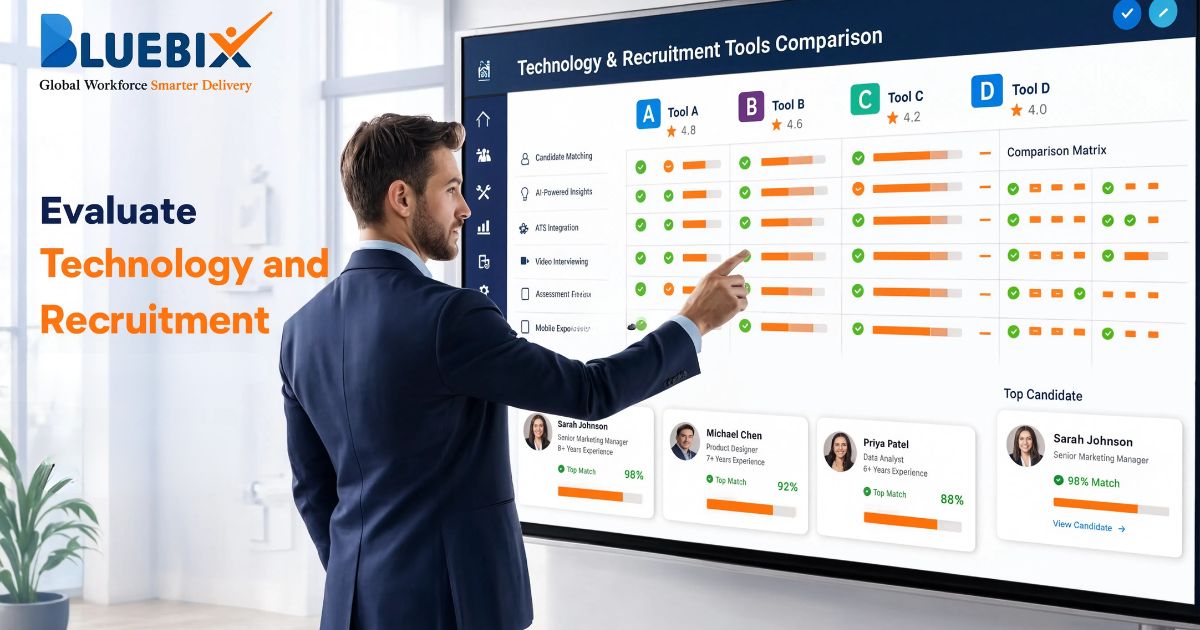
Modern recruitment depends on technology. While experienced recruiters remain essential, technology helps them work faster, communicate better, and identify stronger candidates.
Ask how the staffing agency uses recruitment technology to improve hiring outcomes—not simply to automate tasks.
Applicant Tracking System (ATS)
An Applicant Tracking System helps recruiters organize candidate information throughout the hiring process.
A well-managed ATS allows agencies to:
- Store candidate profiles
- Track applications
- Schedule interviews
- Monitor hiring stages
- Search previous applicants
- Build long-term talent pools
This improves both recruiter productivity and candidate experience.
AI Candidate Matching
Many staffing agencies now use artificial intelligence to assist with candidate matching.
AI can help recruiters:
- Compare resumes with job descriptions
- Identify relevant skills
- Rank qualified applicants
- Reduce manual resume screening
- Recommend potential matches
However, AI should support—not replace—human judgment. The best hiring decisions still rely on experienced recruiters who evaluate communication skills, cultural fit, and long-term potential.
Recruitment Automation
Automation helps eliminate repetitive administrative tasks while allowing recruiters to spend more time building relationships with candidates and employers.
Examples include:
- Automated interview scheduling
- Email follow-ups
- Candidate reminders
- Resume parsing
- Job posting distribution
When used effectively, automation speeds up hiring without sacrificing quality.
Reporting Dashboard
Many agencies provide online dashboards that allow employers to monitor hiring progress in real time.
Useful dashboard features include:
- Open positions
- Candidate pipeline
- Interview status
- Time-to-fill metrics
- Recruitment activity
- Hiring performance reports
These insights make workforce planning more efficient and improve collaboration between employers and recruiters.
Expert Tip: Ask agencies to demonstrate their recruitment technology during the discovery call. Seeing the platform in action provides a clearer picture of how they manage hiring and communicate with clients.
10. Read Reviews, Testimonials, and Case Studies
Marketing materials tell you what an agency says about itself. Reviews and case studies reveal what clients actually experience.
Before making a decision, research the agency’s reputation across multiple trusted sources.
Google Reviews
Google Reviews often provide valuable insights into:
- Communication quality
- Candidate experience
- Hiring speed
- Professionalism
- Customer service
- Overall satisfaction
Rather than focusing only on star ratings, read detailed reviews to understand recurring strengths and weaknesses.
Client Success Stories
Case studies demonstrate how a staffing agency solves real hiring challenges.
Look for examples involving:
- High-volume hiring
- Difficult-to-fill positions
- Seasonal workforce expansion
- Multi-location recruitment
- Long-term staffing partnerships
The most helpful case studies include measurable outcomes, such as reduced hiring time or improved employee retention.
Third-Party Review Platforms
Expand your research beyond the agency’s website.
Helpful sources may include:
- Google Business Profile
- Better Business Bureau (BBB)
- Glassdoor (for candidate feedback)
- Indeed Company Reviews
- Industry directories
- Professional associations
Checking multiple platforms provides a more balanced perspective.
Client References
One of the best ways to evaluate a staffing agency is to speak directly with current or previous clients.
Consider asking:
- Did the agency deliver qualified candidates?
- How responsive was the recruitment team?
- Were hiring timelines met?
- Would you work with them again?
- What could they improve?
A reputable staffing agency should be comfortable providing relevant client references when appropriate.
11. Measure Scalability
Your hiring needs today may look very different a year from now.
The best staffing agencies grow with your business rather than forcing you to switch providers as hiring demands increase.
Seasonal Hiring
Many businesses experience predictable hiring spikes during holidays, peak production periods, or special projects.
Ask whether the agency has experience supporting seasonal workforce planning without sacrificing candidate quality.
Multi-Location Hiring
If your company operates across multiple cities or states, evaluate whether the agency can coordinate recruitment across all locations.
Consistency in hiring standards becomes increasingly important as organizations expand.
High-Volume Recruitment
Some staffing agencies specialize in filling hundreds of positions within short timeframes.
Examples include:
- Manufacturing plants
- Distribution centers
- Warehouses
- Healthcare systems
- Call centers
If large-scale hiring is part of your growth strategy, verify that the agency has the recruiter capacity and infrastructure to support it.
Long-Term Partnership
Instead of asking, “Can this agency fill today’s vacancy? ask:
Can this agency support our hiring strategy over the next 3 to 5 years?
Long-term recruitment partners continuously learn about your organization, improve hiring efficiency, and become more valuable over time.
12. Schedule a Discovery Call Before Signing
Never choose a staffing agency based solely on marketing materials or pricing.
A discovery call allows both parties to evaluate whether the partnership is a good fit.
Treat this meeting like an interview—because that’s exactly what it is.
Questions to Ask
Prepare thoughtful questions, such as:
- How do you source candidates?
- What industries do you specialize in?
- What’s your average time-to-fill?
- How do you measure recruitment success?
- What makes your agency different?
The quality of the answers often reflects the quality of the partnership.
Communication Style
Pay attention to how the recruiter communicates.
Do they:
- Listen carefully?
- Ask meaningful questions?
- Explain their process clearly?
- Respond honestly?
- Focus on understanding your business.
Strong communication early in the relationship usually leads to smoother collaboration later.
Business Understanding
A good staffing agency should spend more time learning about your organization than talking about itself.
Expect questions about:
- Company culture
- Workforce challenges
- Hiring goals
- Growth plans
- Leadership expectations
- Required technical skills
The more they understand your business, the better they can represent your brand to candidates.
Cultural Fit
Technical qualifications matter—but cultural alignment often determines long-term employee success.
Choose a staffing agency that understands:
- Your company values
- Leadership style
- Team dynamics
- Workplace expectations
- Long-term hiring vision
A recruiter who understands your culture is more likely to introduce candidates who will thrive—not just meet the job description.
Expert Tip: Before signing any agreement, score each staffing agency against the 12 criteria in this checklist. Comparing agencies using a consistent evaluation framework helps remove emotion from the decision and makes it easier to identify the partner best suited to your organization’s hiring goals.
Key Takeaway
The best staffing agency isn’t necessarily the largest or the least expensive—it’s the one that understands your business, communicates transparently, delivers qualified candidates consistently, and can scale alongside your organization’s growth.
By evaluating agencies against these 12 expert tips, you’ll be better equipped to choose a recruitment partner that supports both your immediate hiring needs and your long-term workforce strategy.
Questions to Ask Before Choosing a Staffing Agency
Choosing a staffing agency is much like hiring a key employee. The questions you ask during the discovery process can reveal whether the agency has the experience, systems, and commitment to become a trusted hiring partner.
Instead of focusing only on pricing, evaluate how the agency approaches recruitment, communication, and long-term partnership.
Can You Provide Client References?
Client references offer valuable insight into an agency’s performance. Speaking with current or former clients helps verify whether the agency consistently delivers qualified candidates and maintains strong communication throughout the hiring process.
Ask references about:
- Overall hiring experience
- Candidate quality
- Time-to-fill
- Responsiveness
- Problem resolution
- Whether they would work with the agency again
What Industries Do You Specialize In?
Industry expertise often leads to better hiring outcomes.
Recruiters who specialize in your sector understand:
- Industry terminology
- Required certifications
- Salary expectations
- Hiring challenges
- Candidate availability
This knowledge helps them identify stronger candidates faster than general recruiters.
How Do You Source Candidates?
A quality staffing agency should use multiple sourcing channels rather than relying only on online job boards.
Look for agencies that recruit through:
- Internal talent databases
- Employee referrals
- Professional networking
- Industry associations
- LinkedIn outreach
- Passive candidate engagement
A diverse sourcing strategy usually results in a stronger talent pool.
What’s Your Average Time-to-Fill?
Ask how long it typically takes to fill positions similar to yours.
Instead of accepting a single number, request additional context:
- Average hiring timeline
- Time to submit qualified candidates
- Interview-to-offer timeline
- Factors that may affect hiring speed
Realistic expectations help improve workforce planning.
What Happens if a Candidate Doesn’t Work Out?
Even the best hiring process cannot guarantee perfect outcomes.
Ask whether the agency offers:
- Replacement guarantees
- Follow-up support
- Performance check-ins
- Additional candidate searches
Agencies that stand behind their placements demonstrate confidence in their recruitment process.
How Do You Ensure Compliance?
Compliance is particularly important for industries with strict employment regulations.
Ask how the agency handles:
- Employment eligibility verification
- Background screening
- Credential verification
- Payroll compliance
- Workplace safety requirements
- Worker classification
A documented compliance process reduces hiring risks.
What Recruitment Technology Do You Use?
Technology improves recruitment efficiency when combined with experienced recruiters.
Ask whether the agency uses:
- Applicant Tracking Systems (ATS)
- AI-assisted candidate matching
- Recruitment automation
- Candidate relationship management tools
- Reporting dashboards
Modern technology can improve both hiring speed and candidate quality.
How Often Will We Receive Hiring Updates?
Regular communication prevents misunderstandings and keeps hiring projects moving.
Ask:
- Who will provide updates?
- How often will reports be shared?
- What information is included?
- How quickly are urgent requests handled?
Clear communication builds trust throughout the partnership.
Red Flags to Avoid When Selecting a Staffing Agency
While many agencies provide excellent recruitment support, others may create more problems than they solve.
Watching for these warning signs can help you avoid costly hiring mistakes.
Unrealistic Hiring Promises
Be cautious of agencies that promise to fill every position within a few days or guarantee perfect candidates.
Quality recruitment requires careful sourcing, screening, and evaluation. Agencies making unrealistic promises often prioritize speed over quality.
Poor Communication
Delayed responses, missed meetings, and inconsistent updates are early indicators of potential service issues.
If communication is difficult before becoming a client, it’s unlikely to improve afterward.
No Industry Experience
Recruiters unfamiliar with your industry may struggle to understand technical roles, certifications, or workforce challenges.
Always verify relevant recruitment experience before signing an agreement.
Hidden Fees
Review contracts carefully.
Watch for unexpected charges related to:
- Advertising
- Candidate testing
- Background screening
- Replacement hires
- Administrative services
Transparent pricing builds stronger partnerships.
No Screening Process
If an agency cannot clearly explain how candidates are screened, interviewed, and evaluated, expect inconsistent hiring quality.
A structured recruitment process should always be documented.
Weak Online Reputation
Read reviews across multiple platforms rather than relying only on testimonials published on the agency’s website.
Look for recurring themes instead of isolated complaints.
Lack of Transparency
Professional staffing agencies openly discuss:
- Recruitment methods
- Pricing
- Timelines
- Challenges
- Performance metrics
Avoid agencies that provide vague answers or avoid difficult questions.
No Performance Metrics
Agencies should measure and monitor hiring performance.
If they cannot explain metrics such as time-to-fill, retention rate, or placement success, they may lack a data-driven recruitment strategy.
Staffing Agency vs In-House Recruitment: Which Is Better?
Both staffing agencies and internal recruitment teams play important roles in hiring. The right choice depends on your hiring volume, budget, internal resources, and business goals.
Rather than viewing them as competitors, many successful organizations combine both approaches.
Cost Comparison
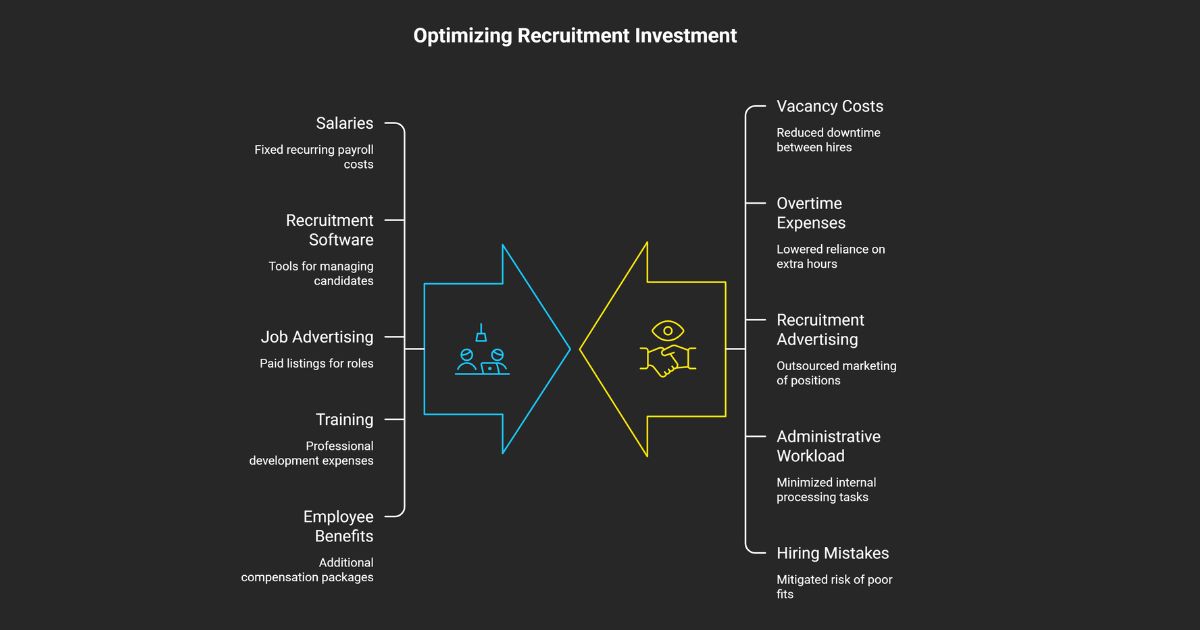
An internal recruitment team involves ongoing expenses such as salaries, recruitment software, job advertising, training, and employee benefits.
Staffing agencies charge service fees, but they can reduce:
- Vacancy costs
- Overtime expenses
- Recruitment advertising
- Administrative workload
- Costly hiring mistakes
For occasional or specialized hiring, outsourcing recruitment may provide better value.
Hiring Speed
Staffing agencies often fill positions faster because they already maintain active talent pools and established sourcing networks.
Internal recruiters usually begin each search from scratch, especially for difficult-to-fill roles.
Talent Access
Staffing agencies often have access to passive candidates who are not actively applying for jobs.
Their professional networks, referral programs, and industry relationships expand the available talent pool beyond traditional job boards.
Scalability
Hiring demands change over time.
Staffing agencies allow businesses to scale recruitment quickly during:
- Seasonal demand
- Business expansion
- Large projects
- New facility openings
Internal teams may struggle to manage sudden increases in hiring volume without additional resources.
Best Choice by Business Size
There is no one-size-fits-all solution.
Generally:
- Small businesses benefit from staffing agencies because they avoid the cost of maintaining a large internal recruitment team.
- Mid-sized businesses often combine internal HR with external staffing support.
- Large enterprises frequently use a hybrid model, relying on staffing agencies for specialized, high-volume, or hard-to-fill positions while internal recruiters manage strategic hiring.
Mistakes Companies Make When Choosing a Staffing Agency
Even experienced hiring managers can make mistakes when selecting a staffing partner. Avoiding these common pitfalls can improve hiring success and reduce long-term recruitment costs.
Choosing Based Only on Price
The cheapest agency isn’t always the best value.
Poor candidate quality, higher turnover, and slower hiring often cost far more than paying for experienced recruiters.
Ignoring Reviews
Online reviews, case studies, and client references provide valuable insight into an agency’s performance.
Take time to research before signing an agreement.
Not Defining Hiring Goals
Recruiters perform best when expectations are clear.
Before contacting agencies, define:
- Required skills
- Hiring timeline
- Employment type
- Budget
- Long-term workforce goals
Skipping Service-Level Agreements (SLAs)
An SLA outlines expectations for communication, candidate submissions, timelines, and responsibilities.
Without one, misunderstandings become more likely.
Overlooking Technology
Modern recruitment depends on technology for sourcing, communication, reporting, and candidate management.
Agencies that invest in recruitment technology often provide a smoother hiring experience.
How Bluebix Inc Helps Businesses Hire Faster

Finding qualified employees in today’s competitive job market requires more than posting vacancies online. Businesses need a recruitment partner that understands their industry, hiring challenges, and long-term workforce goals.
At BluebixInc, we focus on building recruitment partnerships rather than simply filling open positions. Our approach combines experienced recruiters, modern recruitment technology, and a structured hiring process to help employers make confident hiring decisions.
Industry Expertise
Our recruiters understand the unique workforce challenges across manufacturing, warehousing, logistics, engineering, skilled trades, administrative support, and other business sectors.
Qualified Candidate Network
We continuously build relationships with active and passive candidates, giving clients access to a broader talent pool.
Fast Hiring Process
Using proven sourcing strategies and efficient screening methods, we help reduce hiring timelines while maintaining candidate quality.
Flexible Staffing Solutions
Whether you need temporary workers, contract professionals, direct hires, or project-based staffing, we tailor our recruitment approach to match your workforce needs.
Dedicated Recruiters
Every client receives personalized support from recruiters who take time to understand business goals, company culture, and hiring expectations.
Nationwide Hiring Support
As your hiring needs grow, our scalable recruitment solutions help support expansion across multiple locations while maintaining consistent hiring standards.
FAQ
How do I choose the best staffing agency?
Start by evaluating the agency’s industry experience, recruitment process, candidate screening methods, communication style, pricing transparency, compliance knowledge, technology, client reviews, and hiring performance. Choose a partner who understands your business goals, rather than one that offers only the lowest price.
What should I look for in a staffing company?
Look for proven industry expertise, qualified recruiters, transparent pricing, strong candidate screening, measurable hiring success, responsive communication, modern recruitment technology, and positive client reviews. A reliable staffing agency should act as an extension of your hiring team.
Are staffing agencies worth the cost?
Yes, especially when hiring is time-sensitive or specialized. A quality staffing agency can reduce vacancy costs, improve candidate quality, shorten hiring timelines, and lower the risk of expensive hiring mistakes, often delivering greater long-term value than handling recruitment entirely in-house.
How much do staffing agencies charge employers?
Pricing varies depending on the service provided. Temporary staffing typically includes an hourly markup, while direct hire recruitment often charges a percentage of the candidate’s first-year salary. Always request a detailed breakdown of fees before signing a contract.
Can a staffing agency help with permanent hiring?
Absolutely. Many staffing agencies specialize in direct hire recruitment, sourcing, screening, interviewing, and presenting qualified candidates for permanent positions while supporting employers throughout the hiring process.
How long does it take a staffing agency to fill a position?
The timeline depends on the role, industry, and labor market. High-demand or specialized positions may take longer than entry-level roles. Experienced staffing agencies typically reduce hiring time by leveraging established talent networks and proactive sourcing strategies.
What industries benefit most from staffing agencies?
Industries such as manufacturing, healthcare, logistics, warehousing, engineering, skilled trades, information technology, and administrative services frequently benefit from staffing agencies because they often face ongoing workforce shortages and fluctuating hiring demands.
How do staffing agencies find qualified candidates?
Staffing agencies combine multiple sourcing methods, including internal candidate databases, employee referrals, professional networking, LinkedIn outreach, industry associations, job boards, and passive candidate engagement to build strong talent pipelines.
Can staffing agencies handle seasonal hiring?
Yes. Many agencies specialize in rapidly scaling workforces during peak seasons, production increases, holiday demand, or special projects. This flexibility allows businesses to meet changing workforce needs without increasing permanent headcount.
What’s the difference between a staffing agency and a recruiter?
A recruiter may work independently or within a company’s HR department, focusing on individual hiring needs. A staffing agency is an organization that provides comprehensive recruitment services, including sourcing, screening, onboarding support, temporary staffing, contract staffing, and direct-hire solutions.
Conclusion
Choosing the right staffing agency is a strategic business decision that impacts productivity, employee retention, and long-term growth.
By following the 12 expert tips in this guide, understanding your hiring needs, evaluating industry expertise, reviewing recruitment processes, verifying compliance, and asking the right questions, you’ll be better prepared to select a staffing partner that delivers real value.
Rather than focusing solely on cost, prioritize experience, transparency, communication, and the potential for long-term partnership.
If your organization is looking for a reliable recruitment partner, BluebixInc is ready to help you build a stronger workforce with flexible staffing solutions tailored to your business goals.